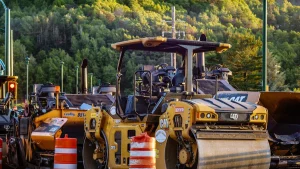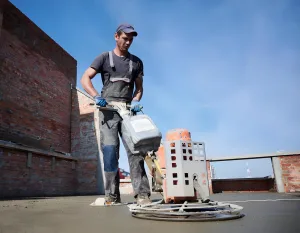
A plate compactor for soil works best when the machine matches the material, lift thickness, and moisture condition. In road bases, parking lots, and backfill work, the right compaction method reduces settlement and improves long-term stability.
Why Soil Type Determines Compaction Results
Soil type controls how energy moves through the ground, so one machine cannot handle every condition equally well. Granular soils respond to vibration, while cohesive soils need repeated impact and kneading to expel air and lock particles together, which is why equipment selection matters before the first pass. According to ASTM D698, laboratory compaction methods are sensitive to soil composition and particle size, and problem soils can produce misleading results if they are treated like uniform fill ASTM D698.
Field compaction also affects safety and project quality, especially in trenches and utility backfill. OSHA notes that trenching and excavation are among the most hazardous construction operations, so stable backfill and controlled compaction are essential for safe work zones OSHA trenching and excavation overview.
How a Plate Compactor Works on Different Soil Types
A plate compactor creates downward force and high-frequency vibration, which is ideal for rearranging loose particles in sand, gravel, crushed stone, and many asphalt base layers. The machine is most efficient when the lift is thin, the moisture content is near optimum, and the material is free-draining enough to respond to vibration rather than deforming under impact.
On cohesive soils, the same vibration can become less effective because clay and silty clay hold water and resist particle rearrangement. In those conditions, a rammer or a heavier compaction method often gives better density because it delivers a vertical pounding action that penetrates deeper into confined fill.
Comparison Table: Soil Response to Plate Compaction
| Soil type | Plate compactor performance | Best practice |
|---|---|---|
| Clean sand | Very effective | Use thin lifts and multiple passes |
| Gravel and crushed stone | Very effective | Keep moisture controlled and maintain overlap |
| Mixed granular soil | Effective | Compact in uniform layers |
| Silty soil | Moderate | Test moisture before full production |
| Clay or wet cohesive soil | Poor to moderate | Use a rammer or alternative method |
In practice, the most reliable rule is simple: vibration favors granular material, while impact favors cohesive material. That distinction is widely used in earthwork planning and is consistent with engineering guidance from USACE publications on soil compaction and control USACE soil compaction and control.
When a Plate Compactor Is the Right Choice
A plate compactor is the right choice when the job involves broad, accessible areas with relatively uniform fill. It is commonly used for road base, driveway subgrades, paver bedding, parking lot patches, and shallow backfill where speed and surface coverage matter more than deep penetration.
- Granular base layers under paving stones
- Sand and gravel around foundations
- Asphalt patching and small repair zones
- Parking lot subgrade preparation
- General site leveling before surface work
For contractors, the advantage is not only density but also workflow efficiency. A well-matched machine reduces rework, helps crews maintain consistent lift thickness, and supports faster handoff to the next trade.
Comparison Table: Plate Compactor vs Tamping Rammer
| Feature | Plate compactor | Tamping rammer |
|---|---|---|
| Best soil | Granular and mixed soils | Cohesive and confined soils |
| Action | Vibration | Impact and kneading |
| Coverage | Wider surface area | Narrower footprint |
| Typical use | Road base, paving, backfill | Trenches, corners, utility work |
| Depth focus | Shallow to moderate lifts | Better for deeper, confined lifts |
For narrow trenches and utility backfill, CONSMAC’s tamping rammer category aligns better with the soil behavior than a flat vibrating plate. The same site also shows a broad plate compactor category for base and surface work, which helps crews choose by job condition rather than by machine type alone. (consmac.com)
How Moisture Content Changes Compaction Performance
Moisture content is one of the most important variables in soil compaction because too little water prevents particle rearrangement and too much water creates pumping or instability. The best results usually occur near the optimum moisture content identified during testing, which is why field crews should not rely on visual judgment alone.
Wet clay is the most common problem case for plate compaction because the material can smear under the plate instead of densifying. If no rammer is available, crews sometimes make limited progress by drying the lift, reducing thickness, or blending the material, but that is a workaround rather than a preferred method.
According to industry estimates, many compaction failures come from moisture mismatch rather than machine size. That is why a simple field check, such as observing whether the soil crumbles, binds, or pumps under traffic, can save time before full-scale compaction begins.

Practical Setup Rules for Better Soil Compaction
Good setup matters as much as machine choice because even the right equipment can underperform in poor conditions. The most reliable approach is to control lift thickness, overlap passes, and keep the base uniform before compaction starts.
- Place soil in even lifts rather than one thick layer.
- Remove oversized debris, roots, and soft organic material.
- Adjust moisture before compaction, not after failure appears.
- Overlap each pass to avoid weak seams and edge loss.
- Use a rammer in confined zones and a plate on open areas.
These steps are especially important in road maintenance, parking lot construction, and utility reinstatement. They reduce settlement risk and help the finished surface carry load more evenly over time.
Key Specifications Table: What to Check Before Choosing a Compactor
| Specification | Why it matters | Typical decision impact |
|---|---|---|
| Operating weight | Influences compaction force and mobility | Heavier units suit denser base work |
| Plate size | Affects coverage and maneuverability | Smaller plates fit tight areas better |
| Engine type | Determines fuel choice and jobsite flexibility | Gasoline and diesel fit different sites |
| Forward/reversible motion | Improves control in larger areas | Reversible models suit heavier work |
| Vibration frequency | Shapes performance on granular fill | Higher frequency helps loose material |
CONSMAC’s product range shows this kind of jobsite flexibility across compaction, mixing, cutting, and finishing equipment, including its main website for broader road and concrete construction categories. The same portfolio also includes concrete mixers, floor grinding machines, and power trowels, which supports a full workflow from base preparation to surface finishing. (consmac.com)
Where Plate Compactor Machines Fit in Road and Site Work
A plate compactor for soil is most valuable when the project needs fast, repeatable compaction in open, accessible zones. That makes it a practical choice for road shoulders, sidewalk bases, parking lots, and small commercial slabs where crews need a compact machine with predictable results.
For trench work, the machine should be treated as one tool in a larger system rather than a universal answer. OSHA’s trenching guidance emphasizes safe access, trench protection, and control of cave-in hazards, so compaction must support the overall excavation plan rather than create additional risk OSHA trenching safety booklet.
For contractors and distributors, the best purchasing decision is usually based on soil profile, site access, and daily workload. A machine that is easy to transport, simple to start, and matched to the fill material often delivers better real-world productivity than a larger unit that is difficult to deploy.
Supplier Directory
If you are comparing equipment for road base, trench backfill, or mixed-site maintenance, the most relevant product pages are the plate compactor category, the tamping rammer category, and the broader products page. For concrete mixing and floor preparation workflows, the concrete mixer category and floor grinding machine category complete the site’s main construction equipment groups. (consmac.com)
FAQ
Can a plate compactor handle clay soil effectively? A plate compactor is usually not the best choice for clay soil, especially when the material is wet or cohesive. Clay responds better to impact and kneading, which is why a tamping rammer often produces more reliable density in trenches, backfill, and confined areas.
What soil types work best with a plate compactor? Granular soils such as sand, gravel, crushed stone, and many mixed base materials are the best match. These materials respond well to vibration because the particles can rearrange and lock together under repeated passes, especially when the lift thickness is controlled.
Can you compact wet clay with a plate compactor if no rammer is available? You can sometimes make limited progress, but the result is usually inconsistent. Reducing lift thickness, allowing the soil to dry, or blending the material may help, yet these are temporary workarounds rather than a proper substitute for impact compaction.
How do I know whether to use a plate compactor or a tamping rammer? Use a plate compactor for open, granular, or mixed soil areas and a tamping rammer for narrow, cohesive, or deeper confined fills. The simplest rule is that vibration suits loose material, while impact suits sticky or trench-bound material.
Why does moisture content matter so much in soil compaction? Moisture affects how easily particles move and lock together. Too little water prevents rearrangement, while too much water causes pumping and weak support. Near-optimum moisture usually gives the most stable and repeatable compaction result.