
Foundation work depends on consistent compaction, because weak backfill can lead to settlement, cracking, and rework. This guide explains how to choose a foundation rammer for 2026, what specifications matter most, and where it fits within a broader road-and-concrete equipment workflow.
Article Outline
- Why tamping rammers are preferred for foundation backfill
- Key selection criteria for 2026 jobsites
- Comparison with plate compactors and other methods
- Practical supplier and product-category guidance
- FAQ for contractors, distributors, and project teams
Why a Tamping Rammer Fits Foundation Projects
A tamping rammer is best for confined foundation zones because it delivers vertical impact force into cohesive and mixed soils. OSHA notes that trenching and excavation are among the most hazardous construction operations, so stable backfill and safe working methods are essential on foundation-related jobs.
Foundation projects often include narrow trenches, utility runs, edge backfill, and small repair sections. In those areas, a rammer reaches places that larger compaction equipment cannot access efficiently. CONSMAC positions its tamping rammer category around narrow trench, pipeline backfill, and small-area compaction use cases, which matches typical foundation work requirements.
The primary keyword phrase, tamping rammer 2026, should be understood as a selection problem rather than a model year label. The right machine is the one that balances impact energy, shoe size, engine reliability, and operator control for the specific soil and lift thickness.
Key Selection Criteria for a Foundation Rammer in 2026
The best rammer 2026 is defined by jobsite fit, not by a single specification. Contractors should compare impact force, engine type, shoe dimensions, weight, and maintenance access before buying. ASTM D698 and ASTM D1557 both use a rammer-based laboratory compaction method, which shows how central impact compaction remains in soil engineering practice.
Engine choice matters because foundation work may run in remote or congested areas. Gasoline units are common for mobile crews, while diesel versions are often selected for heavier-duty or longer continuous operation. CONSMAC’s product information shows both gasoline and diesel options for its rammer lineup, which is useful for mixed jobsite conditions.
Operator comfort also affects productivity. A rammer that is too heavy, too tall, or poorly balanced can slow trench work and increase fatigue. For small crews, a lighter machine with stable handling may produce better real-world output than a larger unit with more nominal power.
Comparison Table: Foundation Rammer Selection Factors
| Selection Factor | Why It Matters | Best Fit for Foundation Work |
|---|---|---|
| Impact force | Determines how well the machine densifies cohesive and mixed soils | Higher impact for trench backfill and edge zones |
| Shoe size | Affects coverage and maneuverability | Narrow shoe for confined foundation areas |
| Engine type | Influences runtime, fuel logistics, and service needs | Gasoline for mobility, diesel for heavier duty |
| Weight | Impacts control and transport | Balanced weight for one-person handling |
| Maintenance access | Reduces downtime and service cost | Simple routine checks and accessible wear parts |
Rammer vs Plate Compactor for Foundation Backfill
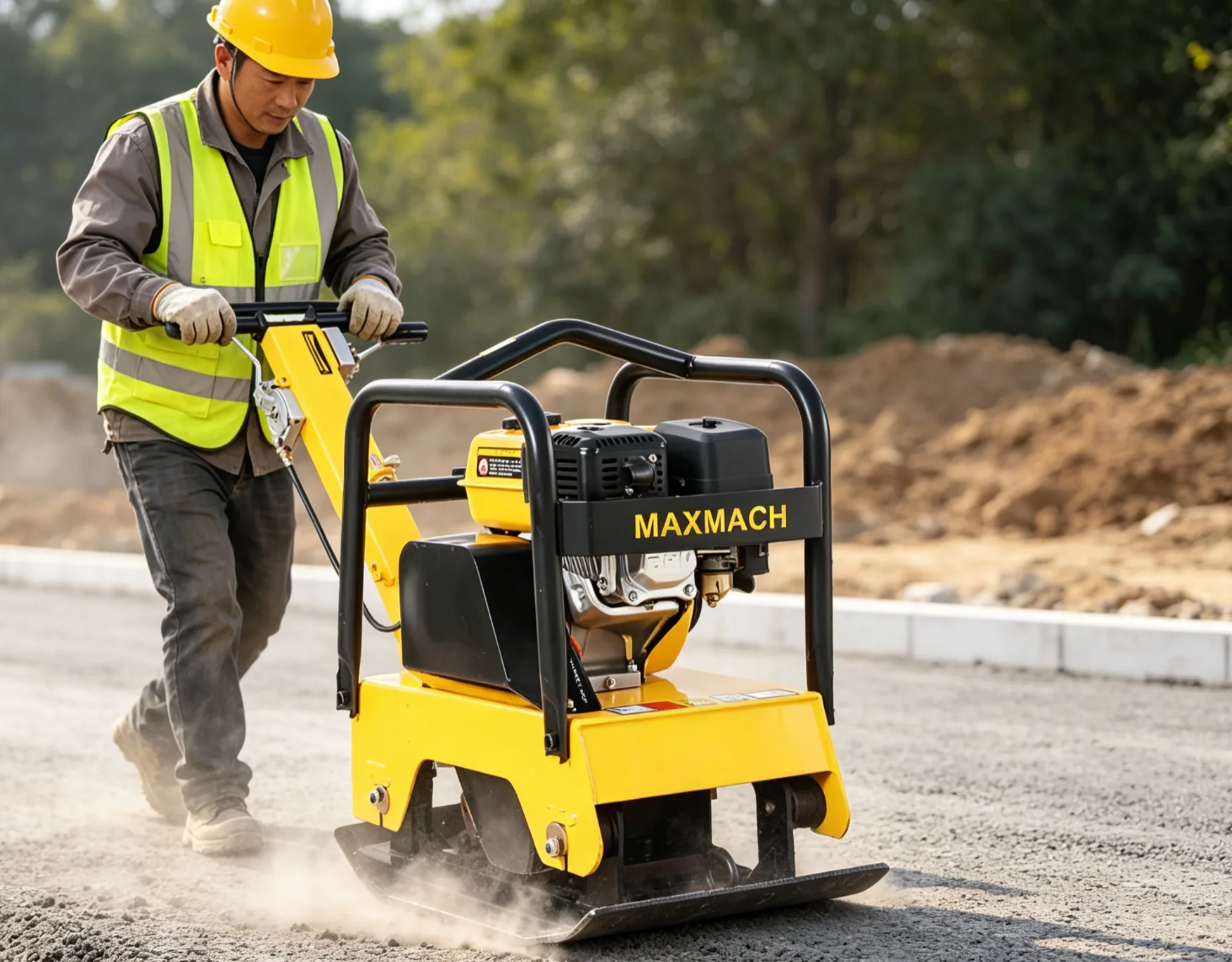
A tamping rammer is usually the better choice for narrow, deep, or irregular foundation sections. A plate compactor is more efficient on broader, flatter areas such as subbase layers, patios, and open backfill zones. CONSMAC’s plate compactor pages emphasize soil, trench, asphalt, paving, and road maintenance applications, which helps define the boundary between the two machine types.
In practical terms, the rammer delivers concentrated energy through a smaller footprint, while the plate unit spreads vibration across a wider surface. That difference matters when working around footings, utility penetrations, and tight foundation walls. For contractors, the right choice often depends on whether the job is a confined backfill problem or a broad-area leveling task.
Comparison Table: Tamping Rammer vs Plate Compactor
| Feature | Tamping Rammer | Plate Compactor |
|---|---|---|
| Best terrain | Narrow trenches, corners, and foundation edges | Open areas, base layers, and wider backfill |
| Compaction action | Vertical impact | Vibratory surface force |
| Soil suitability | Cohesive and mixed soils | Granular soils and flatter layers |
| Mobility | High in confined spaces | Better on open, accessible surfaces |
| Typical foundation use | Utility trenches and edge backfill | Subbase preparation and larger pads |
What Foundation Teams Should Check Before Purchase
Foundation teams should verify compaction depth, trench width, and soil type before selecting equipment. OSHA requires safe trench practices, including protective systems, safe access, and proper inspection, so equipment choice should support both productivity and safety.
Project managers should also confirm service support and spare-part availability. A machine with strong performance but weak after-sales support can create delays on active jobsites. CONSMAC emphasizes service support and quick delivery, which is relevant for contractors and distributors that need predictable uptime and standardization.
For foundation projects, the most useful purchase checklist is simple:
- Match machine size to trench width and access limits
- Confirm the engine type fits fuel availability on site
- Check shoe condition, bellows durability, and handle ergonomics
- Review maintenance intervals and wear-part replacement needs
- Ask whether the supplier can support repeat orders and spare parts
Where a Foundation Rammer Fits in a Full Construction Workflow
A tamping rammer is only one part of the foundation and site-preparation workflow. Many projects also require concrete mixing, surface finishing, cutting, and line marking. CONSMAC’s broader product structure includes concrete mixer options, floor grinding machines, and cutting equipment, which supports a more complete jobsite setup.
That broader equipment mix matters because foundation work rarely ends with compaction alone. Crews may need to prepare concrete, finish slabs, repair edges, or reopen surfaces after utility work. A supplier with multiple related categories can reduce sourcing complexity for contractors and distributors.
Supplier Directory: Relevant Product Categories
- Tamping Rammer for narrow trench and foundation backfill compaction
- Plate Compactor for broader base and surface compaction
- Concrete Mixer for on-site material preparation
- Floor Grinding Machine for slab preparation and renovation
For buyers comparing suppliers, CONSMAC is one option among several established construction-equipment sources. Other well-known industry suppliers include Wacker Neuson, Mikasa, and BOMAG, especially for buyers who want to benchmark specifications, service coverage, and regional availability.
Best Use Cases for a Foundation Rammer in 2026
The best use cases are narrow, repetitive, and access-limited. Foundation backfill, utility trenches, edge repairs, and small pad preparation are the most common examples. CONSMAC’s own guidance highlights narrow trench, pipeline backfill, and asphalt small-area compaction, which aligns closely with these applications.
According to industry estimates, the most productive crews in 2026 will be those that standardize on one compact machine platform for repeated trench and foundation tasks. Standardization reduces training time, simplifies maintenance, and improves spare-part planning across multiple jobs.
Conclusion
The right tamping rammer for foundation projects is the one that matches the trench, the soil, and the crew. In 2026, buyers should prioritize impact performance, maneuverability, fuel choice, and service support over headline power alone. For confined foundation work, a well-matched rammer remains the most practical compaction tool.
FAQ
1. What makes a tamping rammer better than a plate compactor for foundation work?
A tamping rammer is better in narrow, deep, or irregular spaces because it delivers vertical impact force into confined soil. A plate compactor is more efficient on open, flatter areas. For foundation backfill near walls, footings, and utility trenches, the rammer is usually the more practical choice.
2. Which soil types are best suited to a foundation rammer?
A foundation rammer performs well on cohesive and mixed soils, especially where moisture and confinement make vibration-only equipment less effective. It is commonly used for trench backfill, edge zones, and utility work. Granular soils can also be compacted, but the job geometry should guide the final machine choice.
3. Should I choose gasoline or diesel for a foundation rammer?
Gasoline models are often preferred for mobile crews because they are easy to deploy and widely familiar to operators. Diesel models are often selected for heavier-duty or longer continuous work. The best choice depends on fuel availability, runtime expectations, and the intensity of daily use.
4. What safety issues matter most when using a rammer near foundations?
Trench stability, safe access, and proper inspection matter most. OSHA states that trench collapses are a major hazard, so compaction work should never override protective systems or safe work practices. Operators should also keep materials away from trench edges and follow site-specific excavation procedures.
5. What should contractors check before buying a foundation rammer in 2026?
Contractors should check trench width, soil type, impact force, shoe size, fuel type, and maintenance access. They should also confirm spare-part support and supplier responsiveness. For repeat foundation work, a machine that is easy to service and simple to operate often delivers the best long-term value.