
- Uneven vibration is often caused by wear, looseness, or speed instability rather than a single broken part.
- Diagnosis should start with the shoe, mounts, fasteners, belt drive, and engine idle/load speed.
- Repair is most effective when done in sequence: inspect, measure, isolate, replace, then test under load.
- Using the rammer outside its intended trench or backfill application can worsen vibration and shorten service life.
Why tamping rammer vibrates unevenly is a practical maintenance question with real performance impact, because compaction equipment depends on controlled impact frequency and consistent energy transfer to the soil. As a reference point for machine setup and service tolerances, NIST notes that dimensional metrology and calibration discipline matter when diagnosing mechanical wear, and ISO vibration-related maintenance practices help operators separate normal operating behavior from abnormal resonance or imbalance; for example, ISO 20816-1 is the current framework for evaluating machine vibration severity in general terms, while ISO 20816-1 provides the basis for comparing measured vibration levels against acceptable limits. In field work, a tamping rammer with unstable vibration can damage trench edges, leave inconsistent lift density, and force rework on utility backfill, driveway edges, and patch repair zones. If you need a broader equipment comparison, review the rammer product category, the plate compactor lineup, and the road cutting machines used in adjacent site preparation tasks.
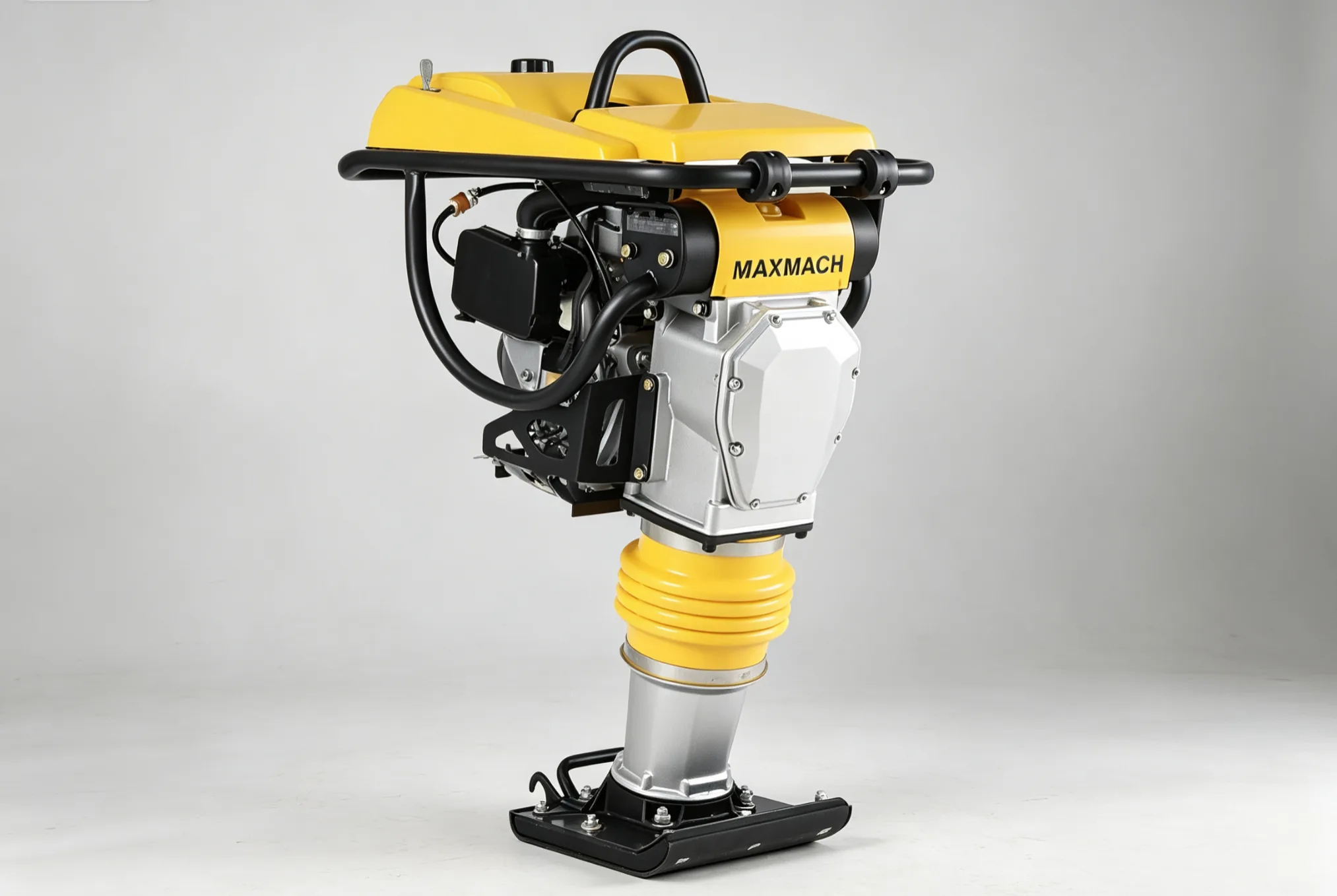
Tamping rammer uneven vibration: what it means on the jobsite
Uneven vibration means the machine is no longer delivering symmetrical, repeatable impact energy. In the field, that usually shows up as side-to-side shaking, hopping, a surging handle, or a rammer shoe that strikes the ground with inconsistent force.
For trench backfill and confined-area compaction, that inconsistency matters because the operator loses control over pass quality. The result can be loose pockets, overcompacted strips, or a visible “wave” pattern in the fill. On utility work, even a small loss of uniformity can mean extra hand tamping at edges and a second compaction pass after inspection.
Unlike a plate compactor, a tamping rammer is built around a vertical impact mechanism. That means the shoe, spring system, bellows, crank, and engine output must stay aligned. If one part drifts out of specification, vibration distribution changes quickly.
Main causes of uneven vibration and how to identify them
The root cause is usually mechanical wear, not random shaking. Most complaints can be traced to one of six failure zones: excitation assembly, fasteners, engine speed, shoe condition, shock isolation, or operating surface.
| Likely cause | Typical symptom | Inspection clue | Repair action |
|---|---|---|---|
| Loose fasteners | Rattling, intermittent shake | Visible movement at frame or handle | Torque fasteners to spec and apply thread locking where allowed |
| Worn rubber mounts | Excess handle vibration | Cracks, compression set, oil swelling | Replace mounts as a matched set |
| Clutch or belt wear | Vibration changes with throttle | Slipping, glazing, dust | Inspect belt tension and clutch engagement |
| Bent shoe or foot | Machine pulls to one side | Uneven wear pattern on plate | Repair or replace the shoe assembly |
| Engine speed fluctuation | Surging vibration | Idle unstable under load | Check carburetion, governor, fuel supply, and air filter |
| Internal bearing wear | Harsh, irregular impact | Noise from exciter housing | Open housing and replace worn bearings |
Engine speed is a common hidden cause of vibration instability. Many small construction engines are designed to run near a governed speed around 3,600 RPM, so when fuel delivery, air filtration, or governor response drifts, the excitation frequency drops out of the intended range and the machine feels uneven. That is why a simple throttle check is not enough; you need to verify actual loaded speed, not just idle sound.
Loose or damaged mounts create the most obvious operator discomfort. When shock isolation fails, the rammer transmits more energy into the handle and frame instead of into the soil. This does not just feel bad. It increases fatigue and can accelerate fastener loosening, which makes the problem self-reinforcing.
How to diagnose rammer vibration fix issues step by step
A reliable rammer vibration fix starts with a structured inspection, not part swapping. The best sequence is to observe, measure, isolate, and only then replace components.
- Shut down the machine and inspect all visible fasteners, guards, and frame joints for looseness.
- Check the shoe and lower assembly for cracks, bent edges, or unusual wear marks.
- Inspect rubber isolation mounts for tearing, hardening, or oil contamination.
- Verify air filter condition, fuel delivery, spark quality, and governor response.
- Listen for bearing noise from the exciter or crank housing during brief test runs.
- Run the rammer on a known test surface and compare vibration behavior at startup, idle, and full throttle.
Load testing is essential because many vibration faults only appear under compaction load. A machine may seem acceptable in free run but become unstable as soon as it meets dense granular backfill or moisture-heavy soil. That is why a repair that looks complete in the shop should still be validated in the field.
| Test point | What to observe | Normal sign | Abnormal sign |
|---|---|---|---|
| Idle | Handle feel and engine stability | Steady rhythm | Hunting or surging |
| Full throttle | Impact consistency | Regular vertical strike | Side shake or uneven hop |
| Loaded compaction | Shoe tracking | Straight travel | Pulling left or right |
| After 10 minutes | Heat and fastener looseness | Stable hardware | New looseness or abnormal heat |
Handle vibration should be treated as a diagnostic clue, not a comfort issue. If the handle shakes more after a short warm-up, the problem may be thermal growth in a bearing, a slipping drive component, or deteriorating rubber isolation. If the vibration is strong from the first second of operation, look first at balance, assembly looseness, and engine speed.
Repair methods that actually work for uneven rammer vibration
The most effective repair method is to correct the highest-probability fault first. In most field repairs, that means tightening, replacing wear parts, and restoring engine speed before opening the exciter housing.
For a practical on-site repair, start with all external fasteners. Then replace any rubber mount that shows visible cracking or permanent compression. If the belt or clutch slips, restore engagement before further use. If the shoe is bent or heavily worn, replace it rather than trying to compensate with tuning, because a distorted base changes the machine’s vibration path.
If internal bearings are noisy, the machine should not return to service without teardown. Bearings in the eccentric or exciter section are critical because they carry repeated shock loads. Once they develop play, uneven vibration usually becomes worse very quickly.
For crews that also maintain compaction equipment across different site conditions, it helps to compare the rammer against a plate compactor for open-area work and a concrete cutting machine for repair-zone preparation. Matching the tool to the site reduces overload and lowers the chance of abnormal vibration.
Why compaction quality changes when vibration is uneven
Uneven vibration reduces energy transfer consistency and lowers compaction reliability. The soil may appear settled on top while remaining loose below, especially in layered backfill or around utility lines.
Compaction performance is not only about force. It is about the repeatability of each impact and the ability to maintain contact with the substrate. When a tamping rammer bounces unpredictably, the lift may receive too much energy in one zone and too little in another.
Field teams often notice this first in trench work, where edges remain soft after the center appears compacted. That is especially common in cohesive fill that needs multiple controlled passes. A stable rammer gives the operator predictable feedback; an unstable one forces guesswork.
| Work scenario | What uneven vibration causes | Jobsite risk | Preferred response |
|---|---|---|---|
| Utility trench backfill | Loose pockets near edges | Settlement after inspection | Recompact in thinner lifts |
| Driveway patch repair | Uneven surface profile | Premature cracking | Repair the rammer before finishing the lift |
| Foundation edge work | Loss of control near forms | Form damage | Use a stable machine with verified mounts |
| Confined corner compaction | Operator fatigue and drift | Missed zones | Inspect shoe tracking and handle isolation |
Preventive maintenance checklist for a tamping rammer
Preventive maintenance is cheaper than repeated vibration repair. Daily checks catch the small issues that become uneven vibration later.
- Check fasteners before every shift.
- Inspect rubber mounts for cracks and oil damage.
- Clean air filters regularly to keep engine speed stable.
- Monitor shoe wear and replace distorted parts early.
- Confirm that belt tension or clutch engagement is consistent.
- Keep fuel and lubrication quality consistent across the fleet.
Operator habits matter as much as components. Dropping the rammer, storing it tilted for long periods, or using it on oversized stone can overload the shock system and create vibration imbalance. A stable start-up, smooth throttle response, and correct lift thickness all reduce stress on the machine.
How to choose between repair and replacement
Repair makes sense when the fault is localized and the frame remains straight. Replacement becomes the better option when multiple wear points fail at once or the exciter housing has suffered structural damage.
| Decision factor | Repair | Replace |
|---|---|---|
| Single cracked mount | Yes | No |
| Minor belt wear | Yes | No |
| Bent shoe with intact frame | Usually yes | No |
| Repeated bearing failure | Maybe | Often yes |
| Cracked exciter housing | No | Yes |
| Chronic instability after multiple repairs | Limited value | Yes |
For contractors, the economic test is downtime versus rebuild cost. If the machine is a daily production tool for trench and backfill work, the cost of one failed compaction day can exceed the cost of a proper repair set, especially when the crew has to return for rework.
That is why many teams keep a backup compaction unit in rotation and use a broader fleet strategy across the site, such as pairing a rammer with a road marking machine for finishing work or a concrete mixer for small patch repair jobs. The goal is not just uptime, but matching machine condition to task criticality.
Real-world troubleshooting priorities for contractors and rental fleets
Rental fleets and contractors should prioritize fast diagnosis because vibration complaints are often customer-facing first. The most useful service record includes engine hours, last belt change, mount replacement date, and any history of overheating or fuel issues.
For fleets, the fastest pattern is usually this: operator reports strong handle shake, shop finds loose hardware or worn mounts, then a test run reveals that the underlying engine speed was also drifting. Fixing only one of those faults often leads to repeat failure within the next few jobs.
A disciplined service log improves repair accuracy and resale value. Machines with recorded maintenance are easier to diagnose, easier to lease, and less likely to be mistaken for a serious structural failure when the problem is actually routine wear.
Frequently asked questions about tamping rammer uneven vibration
Why does my tamping rammer shake more on one side?
One-sided shaking usually means the shoe is worn unevenly, the frame is not aligned, or a mount has failed on one side. Begin with the lower assembly and fasteners before inspecting internal parts.
Can low engine speed cause uneven vibration?
Yes. If the engine cannot hold its governed speed under load, the impact rhythm becomes unstable and the machine may feel rough or weak. Check fuel, air, spark, and governor response.
Should I keep using a rammer that vibrates unevenly?
No. Continued use can worsen wear, reduce compaction quality, and damage mounts, bearings, or the frame. Stop the machine and inspect it before further operation.
Is a bent shoe a serious problem?
Yes. A bent or distorted shoe changes the impact path and can make the machine pull sideways. It also increases the chance of uneven settlement in the fill.
Do rubber mounts need replacement as a set?
In most cases, yes. Replacing only one worn mount can leave the machine imbalanced and may cause the new part to fail early because the load is not shared evenly.
What is the fastest first check for a rammer vibration fix?
Start with fasteners, mounts, and engine speed. Those are the highest-probability causes and can often be inspected without opening the exciter housing.
When should I open the exciter or bearing housing?
Open it when external checks do not solve the issue, or when you hear grinding, knocking, or see rapid worsening of vibration. That usually indicates internal wear.