
- Rammer selection should match soil type, trench width, and compaction depth rather than only engine horsepower.
- Global buyers should verify standards, test data, and service support before choosing a rammer supplier China partner.
- For 2026 sourcing, the strongest suppliers combine product durability, export readiness, and after-sales spare parts coverage.
- Comparing fuel type, impact force, and operating weight is more useful than comparing brochure claims alone.
- Buyers serving road repair, utilities, and municipal maintenance need suppliers with stable lead times and multilingual export communication.
Choosing a China tamping rammer supplier 2026 is a technical sourcing decision, not just a price negotiation, because compaction quality affects settlement, rework risk, and long-term pavement performance. In road and trench applications, poor compaction can leave weak subgrade zones that later fail under traffic load. For context, modern construction buyers increasingly align equipment choices with documented standards such as ISO 9249:2018 for net power declarations and ASTM E11 for test sieve classifications used in soil grading workflows. A practical sourcing strategy also considers export support, because distributors and contractors often need a rammer supplier China partner that can handle different fuel preferences, operating conditions, and service expectations across multiple markets.
Why a China Tamping Rammer Supplier Matters for 2026 Sourcing
A China tamping rammer supplier matters most when buyers need a machine that is simple to deploy, easy to service, and robust enough for mixed-site conditions.
In 2026, global buyers are not only comparing unit cost; they are evaluating total ownership cost, field reliability, and the supplier’s ability to support repeat orders across multiple regions. This is especially important for distributors serving utilities, landscaping contractors, road maintenance teams, and municipal repair crews. A rammer may look like a simple machine, but sourcing mistakes are expensive: undercompaction triggers settlement, and settlement triggers callbacks, patching, and reputation damage.
For compaction work, the key question is whether the supplier understands the jobsite. Narrow trenches need a different tool profile than shoulder repair or backfill around foundations. That is why a capable rammer supplier China partner should clearly explain use cases, not just list engine displacement. For buyers who also source complementary equipment, it is useful to compare options across plate compactors, rammers, and road cutting machines so each machine matches a distinct施工 stage.
What Global Buyers Should Evaluate in a Rammer Supplier China Partner
The best China tamping rammer supplier 2026 candidates can prove performance, serviceability, and export readiness.
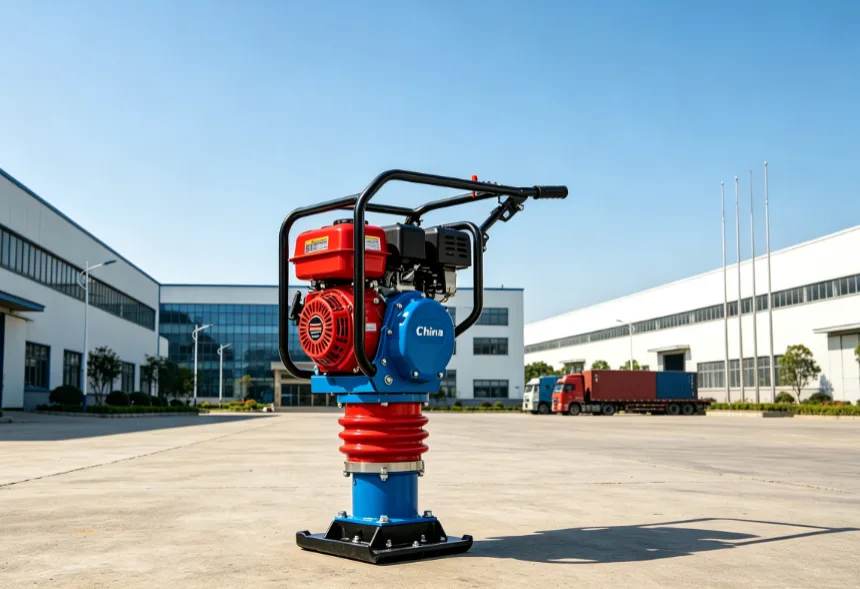
Start with compaction parameters. A rammer is judged by its impact frequency, shoe size, operating weight, and the type of soil it can densify effectively. Then check practical details: fuel system, handle vibration control, air filtration, transport wheels, and whether replacement parts are available quickly. In real procurement work, these details matter more than advertising language because they determine whether the machine survives daily use.
For technical buyers, it also helps to ask for declaration documents. Under ISO 9249:2018, net power is measured under defined conditions, which is more useful than vague power claims. For soil classification and compaction testing workflows, ASTM E11 supports consistent sieve selection in laboratory grading. If a supplier cannot connect the product to a real test method, that is a warning sign.
| Evaluation Factor | Why It Matters | What Buyers Should Ask |
|---|---|---|
| Impact Frequency | Affects compaction rate and soil response | What is the blow rate in impacts per minute? |
| Operating Weight | Influences energy transfer and handling | Is the machine optimized for trench work or general backfill? |
| Shoe Size | Determines contact pressure and trench fit | Does the shoe fit narrow utility trenches? |
| Fuel Type | Impacts site flexibility and maintenance | Is the unit gasoline or diesel, and for which regions is it best suited? |
| Spare Parts Support | Reduces downtime after wear or breakage | Which wear items are stocked for export customers? |
Top 7 Supplier Traits Global Buyers Look for in 2026
Buyers choose the top suppliers by supplier capability, not by catalog size alone.
Because the prompt asks for “Top 7,” the most useful interpretation for a sourcing article is the seven supplier traits that separate a dependable exporter from a short-term trading contact. These traits are especially relevant for a rammer supplier China decision process.
- Consistent product build quality: Buyers want repeatable assembly, stable weld quality, and predictable compaction performance.
- Jobsite-specific design: The supplier should recommend the right machine for trench backfill, edge zones, or patch repair.
- Export documentation: Commercial invoices, packing data, and compliance documents should be accurate and timely.
- Responsive spare parts supply: Filters, foot plates, bellows, and throttle components should be available.
- Communication in English: Clear technical communication reduces order errors and after-sales friction.
- Service discipline: A serious supplier gives maintenance guidance, not just a shipment promise.
- Multi-product coverage: Buyers often prefer vendors that can also support concrete mixers, floor grinders, and power trowels for broader project packages.
In export sourcing, the strongest suppliers reduce complexity for the buyer. That matters because distributors often need one vendor for multiple SKUs, one logistics lane, and one warranty process. When a supplier can support both compaction tools and surface preparation tools, purchasing teams usually gain leverage on consolidation, lead time planning, and service consistency.
Rammer Performance Data Buyers Can Verify
Quantified performance is the fastest way to separate a serious rammer supplier from a generic reseller.
Two numbers are particularly useful in compaction sourcing: impact frequency and operating weight. Many professional tamping rammers operate in a range of roughly 600 to 700 impacts per minute, and that range is widely used in field equipment comparisons because it supports aggressive densification in confined spaces. On the measurement side, compaction quality is often checked through field density testing and soil gradation analysis, which is where standards such as ASTM D698 for the Standard Proctor test and ASTM D1557 for the Modified Proctor test become directly relevant.
These tests matter because contractors do not buy rammers for motion alone; they buy them to meet density targets. A machine that looks powerful but cannot reach density specifications creates hidden cost through rework. In road base and trench backfill, that rework may involve excavation, re-lift, and re-compaction, which can erase any upfront savings from a cheaper supplier.
| Data Point | Typical Value | Why Buyers Care |
|---|---|---|
| Impact Frequency | About 600 to 700 blows/min | Shows how aggressively the machine compacts confined soil |
| Net Power Reference | Declared under ISO 9249:2018 | Improves comparability between suppliers |
| Standard Proctor Test | ASTM D698 | Measures maximum dry density and optimum moisture content |
| Modified Proctor Test | ASTM D1557 | Used for higher-energy compaction requirements |
These reference values are useful because they translate a machine purchase into a real site outcome. If your buyer profile includes municipal maintenance or utility trenching, density compliance is usually more important than brochure speed claims. That is why the best rammer supplier China partners connect machine specifications to the relevant testing logic.
How to Compare China Rammer Wholesaler Options Without Getting Misled
Wholesale buyers should compare the full sourcing package, not only the quoted price.
A China rammer wholesaler may offer a low initial quotation, but the real question is whether the supplier can support repeat orders with stable parts, correct labeling, and export-safe packaging. For global distribution, the cost of a missing gasket or wrong handle assembly can be greater than a small unit-price difference. This is particularly true when the buyer serves multiple countries with different service expectations.
A practical comparison method is to score each supplier on six factors: technical clarity, lead time, sample quality, packaging standard, warranty response, and spare parts depth. If you want to bundle equipment for road repair projects, it is also sensible to source adjacent products such as concrete cutters and road marking machines from the same vendor when the vendor has proven export discipline.
- Request operating videos on real soil, not only idle-run footage.
- Ask for wear-part lists with SKU-level detail.
- Confirm carton and pallet dimensions before shipping.
- Verify whether the supplier supports gas and diesel variants.
- Check whether manuals and labels are available in English.
Use Cases That Matter Most for a Rammer Supplier China Buyer
Rammers are most valuable where access is tight and compaction cannot be done with larger equipment.
The strongest use cases include utility trench backfill, edge compaction along foundations, patch repair on sidewalks, and local road maintenance. In each of these cases, maneuverability matters more than raw size. A well-matched rammer can reach narrow zones that a plate compactor cannot enter. That is why compaction teams often use a rammer for vertical or confined sections and a plate compactor for broader surface layers.
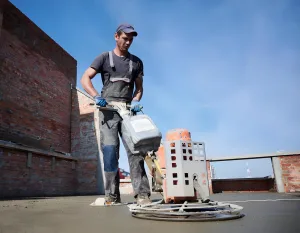
For buyers working in mixed site conditions, the product family matters too. Some projects need a rammer for trench work, a floor grinder for surface prep, and a power trowel for finishing. Suppliers that understand this workflow usually provide better package advice because they are not selling a single tool in isolation.
| Use Case | Best Machine Type | Typical Buyer Need |
|---|---|---|
| Utility trench backfill | Tamping rammer | Narrow access and concentrated impact |
| Parking lot base layers | Plate compactor | Broader coverage and faster surface pass |
| Sidewalk patch repair | Tamping rammer | Edge compaction near structures |
| Concrete surface finishing | Power trowel | Smoother final surface on slabs |
| Road restoration workflow | Rammer plus cutter | Cut, backfill, compact, and restore |
Common Buying Mistakes When Choosing a Rammer Supplier
The biggest procurement mistakes happen when buyers treat all compactors as interchangeable.
One common mistake is overemphasizing engine power while ignoring application fit. Another is assuming a supplier with a low sample price will also provide consistent bulk quality. A third mistake is skipping spare parts planning, which is dangerous for buyers who resell equipment into regions where local service coverage is thin. A fourth mistake is ignoring safety and operating documentation, which can create user complaints or even compliance problems.
The safest approach is to ask for evidence, not promises. That means video proof, parameter sheets, packing photos, and a clear service policy. It also means understanding the standards that frame the industry. For example, OSHA’s silica guidance is relevant to road and concrete work because dust control practices directly affect on-site safety, while NIST guidance on SI units helps teams avoid confusion when comparing metric and imperial documentation across international projects.
- Do not buy by price alone.
- Do not accept vague power claims without a measurement standard.
- Do not skip spare parts planning.
- Do not ignore packaging quality for export shipments.
- Do not assume one model suits all soil conditions.
Supplier Checklist for 2026 Procurement Teams
A disciplined checklist is the easiest way to compare China tamping rammer supplier candidates.
If you are building an RFQ process, ask each supplier to answer the same set of questions. This makes comparisons fair and exposes weak vendors early. It also helps buyers serving multiple regions, because the same checklist can be reused for distributor onboarding, project procurement, and seasonal reorders.
- Which soil types is the rammer recommended for?
- What is the operating weight and impact frequency?
- Are gasoline and diesel options available?
- What wear parts are stocked for export customers?
- Can the supplier provide English manuals and labeling?
- What is the warranty process and average response time?
- Can the supplier support complementary products for road and floor work?
For buyers interested in a broader supplier relationship, it is often better to work with a vendor that can also provide concrete cutting machines and road marking equipment. That makes project planning easier when the work scope includes cutting, compaction, and traffic marking in one package.
FAQ
What should I ask a China tamping rammer supplier before placing a bulk order?
Ask for impact frequency, operating weight, fuel type, spare parts list, warranty terms, and export packaging details. If possible, request a working video on real soil and a sample packing list.
How do I know whether a rammer supplier China partner is suitable for export?
Check whether the supplier can provide English documentation, stable carton and pallet packing, and responsive communication. Export-ready suppliers usually handle repeat order details with much more consistency.
Is a tamping rammer better than a plate compactor?
Neither is universally better. A tamping rammer is usually better for narrow trenches and edge zones, while a plate compactor is better for broader surface compaction.
What standards are relevant when evaluating compactors?
Useful references include ISO 9249:2018 for power declaration and ASTM D698 or ASTM D1557 for soil density testing workflows.
Why do distributors care so much about spare parts?
Because downtime quickly turns into service cost, customer complaints, and delayed resale. For compact equipment, simple wear items often determine whether the machine stays productive in the field.
What is the most practical way to compare China rammer wholesaler offers?
Use a weighted scorecard covering technical clarity, sample quality, lead time, warranty response, parts depth, and export packing. This is more reliable than comparing only the quoted unit price.
Can one supplier cover rammer, cutter, and finishing equipment for road jobs?
Yes, and that can simplify purchasing if the supplier has proven capability across compaction, cutting, surface prep, and finishing products. That is especially useful for distributors and contractors handling mixed-scope jobs.