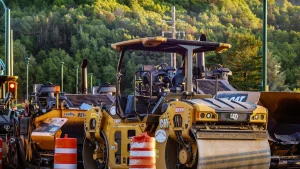
How to Transport a Concrete Mixer Safely on Construction Sites
To transport a concrete mixer safely, first identify whether it is a truck-mounted, towable, or self-loading unit. Inspect the route, empty or secure the drum as the manufacturer requires, use lifting or towing equipment rated for the machine, secure every attachment, control speed on uneven ground, and complete a final check before unloading or restarting.
- Match the moving method to the mixer type, weight, dimensions, and center of gravity.
- Use rated ramps, chains, straps, forklifts, cranes, or towing equipment rather than manual pushing.
- Protect people, the drum, discharge components, hydraulic parts, and the transport vehicle from sudden movement.
- Separate road travel, loading, unloading, and on-site repositioning procedures.
Safe mixer transport is a lifting, towing, route-planning, and concrete-quality issue at the same time. Penn State describes two central objectives when transporting fresh concrete: preventing segregation and preserving workability; its guidance is available through Mixing and Transporting Concrete. This guide explains how to move a mixing unit between work areas, load it onto a vehicle, and position it safely for production.
Identify the Mixer and the Transport Task
The correct procedure depends on whether the machine is being driven, towed, lifted, or carried on a trailer. A truck-mounted mixer is normally transported as part of the road vehicle, while a towable mixer is moved by a suitable towing vehicle. A compact mobile or self-loading mixer may require a ramp, forklift, crane, or low-loader when it must travel between sites.
Classifying the task before work begins prevents the most common handling error: treating a mobile machine as if it were light equipment. Review the manufacturer manual for operating mass, lifting points, axle load, towing requirements, tie-down locations, drum position, and restrictions on moving with material inside the drum. If a data plate or manual is missing, stop and obtain the correct information before loading.
| Transport stage | Primary risk | Required decision | Release check |
|---|---|---|---|
| 1. Preparation | Wrong equipment or route | Confirm machine type, mass, dimensions, and access | Supervisor approves the plan |
| 2. Loading | Slip, rollover, or ramp failure | Select rated ramp, crane, forklift, or trailer | Machine is centered and controlled |
| 3. Securing | Shifting or attachment damage | Use approved tie-down and towing points | All restraints are tensioned and inspected |
| 4. Positioning | Collision, instability, or contact with people | Use a spotter and controlled travel path | Machine is parked, isolated, and stable |
Prepare the Route Before You Move the Mixer
Route inspection is the first practical control because a machine can be stable on level ground but unsafe on a soft shoulder, ramp, slope, or congested site. Walk the route and check width, overhead clearance, turning space, ground bearing, drainage channels, trenches, temporary bridges, traffic interfaces, and pedestrian access.
Remove avoidable obstacles before movement begins. Place barriers around the travel path, establish a clear signal system, and appoint one person to direct the operator during blind maneuvers. Keep bystanders outside the swing, reversing, and unloading zones. Do not rely on hand signals from multiple people because conflicting instructions can cause sudden movement.
- Confirm the route can support the combined load of the machine and transport equipment.
- Measure entrances, gates, ramps, and overhead obstructions before arrival.
- Keep the route free of loose aggregate, mud, standing water, and trailing hoses.
- Plan where the operator will stop if visibility, traction, or communication is lost.
How to Load a Towable or Mobile Mixer
Loading must be a controlled lifting or ramp operation, not a manual pushing exercise. Use only a forklift, crane, loading ramp, or trailer that is suitable for the machine and the site conditions. AIMIX guidance similarly recommends rated handling equipment and warns against attempting to push a mobile mixer manually; its safety discussion is available at Tips for Safe Transportation of Mobile Concrete Mixer with Pump.
Centering the machine on the trailer reduces uneven loading and unwanted sway. Drive slowly up ramps with a trained operator, keep the attachment low when the equipment design allows it, and avoid turning on a ramp. A crane lift requires verified lifting points, compatible slings or chains, a level setup area, and an exclusion zone beneath and around the suspended load.
Before loading, remove or secure loose tools, chutes, hoses, buckets, guards, and accessories. Lock articulated sections where the manufacturer specifies a transport position. Close fuel, electrical, hydraulic, and water connections as required, and prevent the discharge assembly from swinging into the trailer, vehicle, or people.
Secure the Machine for Road or Site Travel
Restraint selection should follow the manufacturer’s instructions and the transport vehicle’s approved tie-down system. Use rated chains, straps, binders, wheel chocks, and anchor points that match the load; never attach restraints to vulnerable guards, handrails, hydraulic lines, or non-structural panels.
Securing the wheels alone may not control the upper structure. Restrain the frame and any moving attachment, apply the parking brake where applicable, place the transmission or drive system in the specified transport position, and chock wheels when the procedure requires it. On a trailer, distribute the load so that the vehicle remains balanced without exceeding its permitted axle or gross-load limits.
| Check number | Component | What to verify | Action if defective |
|---|---|---|---|
| 1 | Trailer and ramp | No visible damage; capacity and angle are suitable | Stop and replace or repair the equipment |
| 2 | Wheels and brakes | Tires, wheel retention, parking brake, and chocks are ready | Isolate the machine until corrected |
| 3 | Tie-down points | Anchors are structural, accessible, and undamaged | Use an approved alternative point |
| 4 | Drum and attachments | Drum, chute, hopper, bucket, and hoses are secured | Lock, remove, or support the item |
| 5 | Travel envelope | No loose objects, people, or obstructions are within the path | Clear the area before movement |
Rechecking restraints after the first controlled movement is a sensible site practice because straps can settle and equipment can shift. For public-road travel, comply with the applicable vehicle, load-securing, lighting, signaling, and escort requirements in the operating jurisdiction. Site rules do not replace road regulations.
Move the Mixer Across the Construction Site
Low speed and smooth control protect both the machine and the people nearby. Avoid abrupt acceleration, braking, sharp turns, and side-slope travel unless the manufacturer specifically permits the condition. Keep the drum, bucket, chute, or other attachment in the approved travel position, and maintain enough clearance from trenches, formwork, reinforcement, walls, and overhead services.
Ground conditions should determine whether movement continues. Stop if the wheels begin to sink, the trailer leans, the towing vehicle loses traction, or the route becomes too narrow for a spotter to remain visible. Do not allow workers to stand between the mixer and a wall, vehicle, or fixed object during repositioning.
Truck-mounted units require an additional operational check before departure. Confirm access for the vehicle, inspect mirrors and cameras, secure the discharge equipment, and verify that the driver understands the planned entry and exit route. Information from SANY explains that the drum continuously rotates during transport to support mixing; review its overview of how a concrete mixer truck works. The required drum operation, speed, and material condition must still follow the vehicle manufacturer’s instructions and the concrete supplier’s requirements.
Protect Concrete Quality During Transport
Fresh concrete should arrive without unnecessary segregation or loss of workability. Avoid harsh starts, sudden stops, excessive vibration, and delays that are not part of the approved delivery plan. Keep the drum or mixing system operating only in the direction and mode specified for the material and machine.

Transport planning should include the discharge sequence before loading begins. Confirm where the mixer will stop, how the chute or pump will be positioned, who controls discharge, and how washout water and residual concrete will be handled. Never add water merely to restore workability unless the responsible concrete professional authorizes the procedure and records the adjustment.
Unload, Park, and Restart Safely
Unloading is complete only when the machine is stable, isolated from traffic, and ready for controlled operation. Level the machine where possible, apply the parking brake, lower attachments to the approved position, place chocks when required, and keep people clear of discharge and pinch points.
- Stop the transport vehicle or towing unit on suitable ground.
- Establish an exclusion zone around the machine and discharge area.
- Remove restraints only after confirming that the machine cannot roll or tip.
- Lower ramps or lifting equipment under controlled supervision.
- Inspect for shifted parts, leaks, impact damage, loose guards, and damaged hoses.
- Complete the manufacturer’s pre-start inspection before mixing or driving.
Cleaning should never begin while moving parts are energized. Shut down, isolate, and follow the lockout or maintenance procedure before reaching into a drum, hopper, chute, belt, or guarded mechanism.
Common Transport Mistakes to Avoid
The most preventable incidents usually result from planning shortcuts rather than complex mechanical failures. Typical mistakes include selecting a trailer without checking capacity, using damaged restraints, relying on wheel chocks alone, moving with unsecured chutes, allowing pedestrians into the route, and reversing without a designated signaler.
Another frequent error is assuming that a mixer can be moved with material inside simply because it can drive while mixing. Whether the drum may contain material during repositioning depends on the machine, load, terrain, distance, and operating instructions. Confirm the permitted condition before movement and prioritize the shortest safe route to the discharge point.
Frequently Asked Questions
1. Can I move a concrete mixer by hand?
Manual pushing is not an appropriate method for a heavy mobile mixer. Use the rated towing, lifting, forklift, or ramp procedure specified for the machine.
2. Should the drum be empty during transport?
For loading onto a trailer, follow the manufacturer’s requirement, which commonly addresses stability and transport mass. For short on-site repositioning, do not assume a loaded drum is acceptable; confirm the operating procedure and ground conditions first.
3. What equipment can load a mobile mixer?
Suitable equipment may include a rated forklift, crane, loading ramp, or low-loader. The choice depends on the machine’s mass, dimensions, lifting points, terrain, and the handling equipment’s capacity.
4. How should I secure a towable mixer?
Use the approved structural tie-down points with rated restraints, secure the attachments, apply the parking brake where applicable, and use wheel chocks when required. Inspect the system before departure and after initial movement.
5. Can one person guide the entire maneuver?
One designated signaler is preferable to multiple people giving conflicting instructions. The operator should stop immediately if the signaler is no longer visible or communication fails.
6. What should I inspect after transporting the machine?
Inspect restraints, wheels, brakes, frame, drum or hopper, chutes, guards, hydraulic lines, hoses, lights, and visible leaks. Complete the normal pre-start inspection before operation.
7. Does transporting affect concrete quality?
Yes. Excessive delay, harsh movement, segregation, and unauthorized water addition can affect workability and uniformity. Coordinate the route, drum operation, discharge timing, and quality requirements before dispatch.
About CONSMAC
CONSMAC supplies road and concrete construction equipment for compaction, cutting, finishing, marking, and concrete vibration applications. Its factory-direct model supports procurement efficiency, while OEM and ODM capabilities help distributors and project buyers configure equipment for local requirements. Product planning emphasizes stable operation, ergonomics, safety, and long-term spare-parts support. For mixer transport planning or related site equipment selection, contact the supplier with your machine type, operating environment, and delivery needs.
Conclusion
Safe movement starts with classification, route control, rated handling equipment, proper restraints, and disciplined communication. Treat loading, towing, on-site repositioning, and unloading as separate operations, and never substitute improvisation for the manufacturer’s instructions. A documented pre-movement check protects workers, the machine, the transport vehicle, and the quality of the concrete.