
- The best tamping rammer for industrial work is the one that fits trench width, soil type, and daily duty cycle.
- For tight spaces, a rammer outperforms a plate compactor because it delivers concentrated impact energy in a narrow footprint.
- Reliable compaction decisions should be based on test methods, not horsepower alone, including density verification and moisture control.
- Maintenance access, parts availability, and vibration reduction matter as much as engine output on multi-shift projects.
- For procurement teams, comparing engine type, weight class, shoe size, and fuel economy is more useful than comparing brand claims.
Best heavy duty tamping rammer machines for industrial projects are not chosen by engine size alone; they are selected by compaction target, trench geometry, and soil behavior, with field verification often tied to standards such as ASTM D698 and ASTM D1557. In industrial roadway, utility, and floor-adjacent work, the wrong tamper can create soft spots, rework, and uneven settlement, while the right machine can improve output consistency across backfill, subgrade repair, and edge-zone compaction. If your project also includes site prep equipment, it helps to compare the rammer with plate compactors, rammer compactors, and concrete cutting machines as part of the same workflow.
What Makes a Heavy Duty Tamping Rammer Suitable for Industrial Projects
A heavy duty tamping rammer is built for concentrated impact in restricted spaces where uniform layer support matters more than surface coverage. Industrial projects usually involve trench backfill, pipe bedding, utility corridors, edge compaction next to slabs, and repair zones where a broad compaction plate is too large or too shallow in its effect. The practical value of a heavy duty rammer comes from its ability to transmit repeated vertical impacts into granular or mixed soils, especially when the work area is narrow, deep, or interrupted by obstacles.
For this reason, the best tamping rammer machine for industrial projects is not the lightest model and not necessarily the most powerful one. The correct choice is the model that can maintain stable compaction output over long shifts, tolerate dusty field conditions, and deliver enough impact to reach the required density without overworking the operator. Buyers should also think in terms of system fit: the rammer is only one part of the compaction stack, which may also include site grading tools, concrete finishing equipment, and cut-and-repair machines from concrete mixers to power trowels.
Heavy Duty Rammer Selection Criteria That Actually Affect Jobsite Output
Impact energy, shoe geometry, engine type, and machine weight are the four selection variables that most strongly affect industrial tamping performance. Contractors often begin with engine horsepower, but that number alone does not determine compaction quality. A 5.5 hp class engine can be adequate for trench work if the machine is well balanced and the shoe area matches the application, while a poorly tuned or poorly balanced higher-output unit may still underperform in real field conditions.
The tamper shoe is especially important because it controls how impact is transferred into the soil. Narrow shoes are usually better for tight trenches and pipe sides, while slightly wider shoes improve coverage in repair zones and backfill lanes. In industrial field work, the machine should also remain predictable when the soil moisture changes, because overly wet material can smear instead of densify and overly dry material may not bond well between lifts.
| Selection Factor | Why It Matters | Typical Industrial Consideration |
|---|---|---|
| Engine class | Drives cycle stability and recovery | Gasoline or diesel depending on fuel access |
| Shoe size | Controls footprint and trench fit | Narrower shoes for utility trenches |
| Operating weight | Affects penetration and handling | Heavier units for denser or thicker lifts |
| Impact frequency | Affects compaction rhythm | Matched to soil type and layer thickness |
| Maintenance access | Reduces downtime | Easy air filter, bellows, and foot inspection |
For industrial buyers, one useful rule is to treat the machine as a duty-cycle tool rather than a display spec. A rammer that starts easily, runs cleanly, and can be serviced quickly between shifts is often more valuable than a spec sheet with exaggerated numbers. That is why procurement teams should inspect air filtration, recoil durability, vibration damping, and service intervals before committing to a fleet purchase.
Industrial Tamping Rammer Applications in Roads, Utilities, and Floor Repairs
The best tamping rammer machine for industrial projects is usually deployed in places where settlement risk is high and access is limited. Utility trench backfill is the most obvious use case, because water lines, cables, gas pipes, and drainage systems often require narrow lifts and careful edge compaction. In these conditions, a heavy duty rammer can help reduce later sinkage, especially when the backfill material is granular and placed in controlled layers.
Road repair crews also rely on tamping rammers near patch edges, curbs, and small excavation zones where a plate compactor cannot achieve full contact. Industrial floor contractors use them around embedded conduits, expansion details, and perimeter areas before finishing the main slab with plate compactor or surface tools. The practical lesson is simple: rammers solve the geometry problem that broad compaction tools cannot solve.
In municipal maintenance, the same machine is useful for manhole surrounds, sidewalk excavations, and driveway tie-ins. These are not glamorous tasks, but they are where settlement complaints usually start. A compact, heavy duty rammer can often save a crew from callback work because the operator can focus force exactly where the soil needs it most.
| Application | Why a Rammer Works | Common Risk if Wrong Tool Is Used |
|---|---|---|
| Utility trench backfill | Narrow access and deep lift control | Soft spots and future settlement |
| Road patch edges | Fits against curbs and cut edges | Edge cracking and patch failure |
| Manhole surround | Targets confined circular zones | Void formation around structures |
| Foundation backfill | High-impact vertical force | Uneven support and wall stress |
| Utility corridor repairs | Works in irregular spaces | Poor density near obstacles |
Gasoline vs Diesel Heavy Duty Rammer Machines
Fuel choice should follow site logistics, not preference alone. Gasoline tamping rammers are often easier to start, lighter to manage, and more common in small to mid-size contractor fleets, while diesel units can be preferred where fuel standardization, torque behavior, or long runtime is more important. For industrial projects, fuel availability, ventilation, maintenance skill, and noise restrictions should be considered alongside raw performance.
Diesel engines generally make sense on projects with centralized fuel management and higher daily utilization. Gasoline engines can be more convenient for mobile repair crews, rental fleets, and mixed-site contractors who move between jobs. The real decision is not which fuel is universally better, but which fuel matches the operating environment. If the project involves multiple equipment types, it is common to standardize on one fuel system to simplify refueling and service parts.
| Fuel Type | Best Fit | Operational Strength | Tradeoff |
|---|---|---|---|
| Gasoline | Mobile crews, repair work, rental fleets | Easy starting and broad availability | May require more frequent fuel planning |
| Diesel | Heavy-duty sites, centralized fleets | Strong torque profile and fuel commonality | Can be heavier and noisier in some formats |
For buyers evaluating a heavy duty tamping rammer, the most useful question is not whether gasoline or diesel is better in theory. The real question is whether the machine can stay productive across weather, shift length, and service access constraints. A machine that is easy to refuel, easy to restart, and easy to maintain usually produces better fleet economics than a marginally stronger machine that spends time waiting for parts.
How Compaction Standards Help Define the Right Tamping Rammer
Compaction quality should be judged against test methods and project specifications, not operator intuition. In soil engineering, ASTM D698 defines the standard Proctor compaction test, while ASTM D1557 defines the Modified Proctor test for higher compaction effort. These standards do not select the machine for you, but they help define the density target that the machine must help the crew achieve.
For field verification, ASTM D6938 covers in-place density and water content by nuclear methods. That matters because a tamper can look productive while still failing to meet density targets if lift thickness, moisture, or material type are wrong. In practical procurement terms, buyers should ask whether the machine can support the project’s specified compaction target, often expressed as a percentage of maximum dry density, rather than asking only how many blows per minute the machine can deliver.
In many industrial projects, compaction is tied to subgrade stability, settlement control, and asset longevity. A trench that is “good enough” on day one may still fail after seasonal loading, water intrusion, or repeated traffic. That is why the tamping rammer should be selected as part of a quality system that includes soil testing, lift thickness control, and inspection.
| Standard | What It Covers | Why It Matters to Rammer Buyers |
|---|---|---|
| ASTM D698 | Standard Proctor effort | Defines baseline density target |
| ASTM D1557 | Modified Proctor effort | Used where higher compaction energy is specified |
| ASTM D6938 | Field density and water content | Verifies whether compaction is actually achieved |
Maintenance, Service Life, and Downtime Control
Maintenance discipline is a deciding factor in whether a heavy duty rammer becomes a dependable asset or a recurring repair item. A good machine should allow quick access to air filters, fuel systems, bellows, and wear components because compactors operate in dust, grit, and vibration-heavy conditions. In industrial fleets, the cost of downtime often exceeds the cost of a preventive service part, which is why serviceability should be treated as a buying criterion.
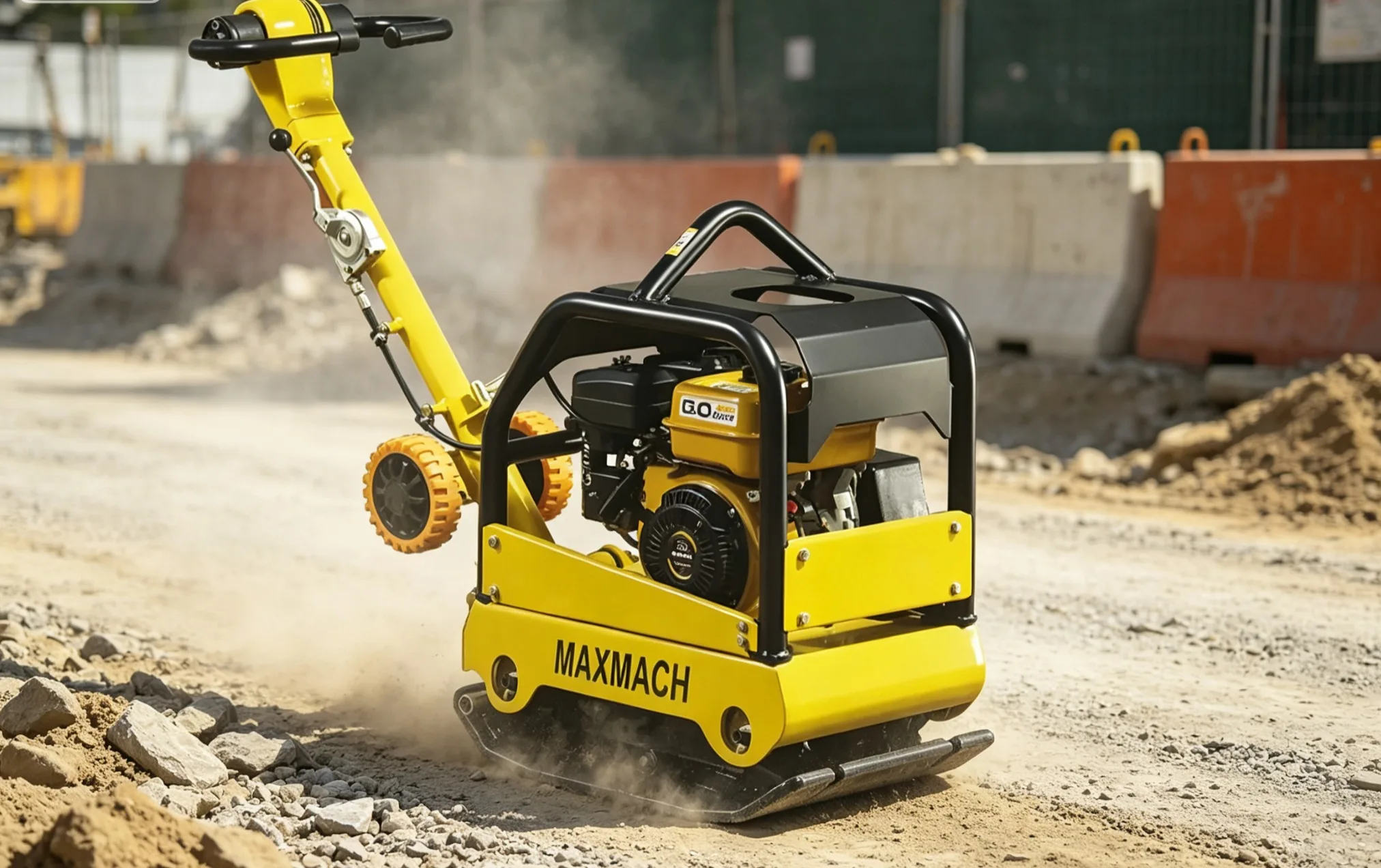
Operators should inspect the shoe, bellows, fasteners, and throttle response before each shift. If the machine begins to lose punch, the first checks are often simple: air restriction, fuel quality, carbon buildup, or a worn rammer foot. Machines used in trench work also need cleaning after wet soil applications because caked material can increase wear and disturb balance.
From a fleet-management view, the ideal tamping rammer is the one that can be returned to service quickly. That includes common wear parts, straightforward access to service points, and documentation that technicians can use in the field. A simple maintenance log can prevent repeated failures and help teams spot patterns before they become expensive.
- Check air filter condition before every shift.
- Inspect the bellows and shoe for visible wear or cracks.
- Confirm throttle response and idle stability at startup.
- Clean soil buildup after wet backfill or clay work.
- Replace wear parts before they reach failure, not after.
How to Choose the Best Heavy Duty Tamping Rammer for Your Site
The best purchasing decision comes from matching the rammer to the job pattern, not from chasing the highest advertised number. Start by defining trench width, average lift thickness, soil type, fuel access, and how many hours per day the machine will run. Then compare machine weight, shoe dimensions, engine class, and service access. If the work includes both trenches and broad base preparation, many contractors keep both a rammer and a plate compactor in the fleet.
A practical decision framework is to ask five questions. First, can the machine fit the narrowest space on the site? Second, can it deliver consistent output over a full shift? Third, is the fuel type compatible with the crew’s logistics? Fourth, can a technician maintain it with minimal downtime? Fifth, does the machine support the project’s compaction verification process? If the answer to any of these is no, the machine is probably not the right industrial choice.
- Identify the narrowest work zone the machine must reach.
- Match the machine to soil type and lift thickness.
- Choose the fuel system that fits the site.
- Check serviceability and wear-part access.
- Confirm that field testing methods will support quality acceptance.
Common Buying Mistakes With Industrial Tamping Rammer Machines
The most common mistake is overbuying power and underbuying usability. Teams often choose a machine because it looks stronger on paper, only to discover that it is hard to maneuver, awkward to service, or poorly matched to the actual trench geometry. Another frequent mistake is ignoring maintenance access, which leads to avoidable downtime on busy jobs.
A second mistake is assuming one rammer fits every soil condition. Cohesive soils, granular backfill, and mixed utility fill behave differently under impact. A machine that works well in one material may be less efficient in another if moisture and layer thickness are not controlled. This is why industrial crews should document what soil conditions they usually face before buying.
A third mistake is treating compaction as a machine-only problem. In reality, field density depends on lift thickness, moisture content, number of passes, and operator technique. If these variables are not controlled, even the best heavy duty tamping rammer will struggle to meet the specification.
- Do not choose by horsepower alone.
- Do not ignore trench width and access limits.
- Do not skip field verification requirements.
- Do not underestimate maintenance time.
- Do not assume one machine covers every material type.
FAQ About Heavy Duty Tamping Rammer Machines
1. What is the best tamping rammer for industrial projects?
The best tamping rammer for industrial projects is the one that matches trench width, soil type, lift thickness, and duty cycle rather than simply having the highest engine rating.
2. When should I use a tamping rammer instead of a plate compactor?
Use a tamping rammer when the work area is narrow, deep, or obstructed, especially in trenches, around pipes, and next to foundations where a plate compactor cannot reach.
3. What standards are used to verify compaction quality?
Common references include ASTM D698, ASTM D1557, and ASTM D6938, which support laboratory and field density verification.
4. Is gasoline or diesel better for a heavy duty rammer?
Neither is universally better; gasoline is often preferred for mobile crews and easier handling, while diesel can be better for centralized fleets and long runtime conditions.
5. How do I know if the rammer is right for my trench?
Check that the shoe and body can fit the narrowest trench section, and confirm that the machine can work effectively at the lift thickness your project specifies.
6. What maintenance matters most on a tamping rammer?
Air filtration, bellows condition, shoe wear, throttle response, and cleaning after wet soil work are the most important routine checks.
7. Can one rammer cover all compaction jobs?
No single rammer is ideal for every task; industrial fleets often pair a tamper with a plate compactor or other site equipment to cover both narrow and broad areas.
For contractors, distributors, and project teams comparing compaction equipment, the smartest purchase is the machine that reduces rework, fits the site geometry, and stays easy to service. In that sense, the best heavy duty tamping rammer is not just a tool for impact, but a small part of a larger construction quality system that protects schedule, cost, and final performance.