- Portable concrete mixers are selected best by site type, batch size, and crew workflow, not by drum capacity alone.
- Small contractors usually gain the most from 120 to 180 liter portable mixers because they reduce waste on short, frequent pours.
- Mobility, discharge control, drum angle, and maintenance access matter as much as motor power in daily field use.
- Mixers for repair work, foundations, and small slabs should be judged by consistency, cleanout speed, and transport readiness.
- Concrete quality is affected by mixing time, water control, and consolidation, so the mixer is part of the quality chain, not just a transport tool.
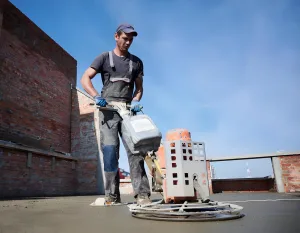
A portable concrete mixer is one of the highest-impact purchases for a small contractor because it directly affects labor efficiency, material waste, and finish quality. In practical field work, a well-chosen concrete mixer can help a crew keep batch consistency within the job specification, support placements that follow ASTM C172/C172M for sampling discipline, and reduce rework caused by under-mixed or over-wet material. For small crews working on sidewalks, footings, utility patches, and local slab repairs, the real question is not whether to buy a portable concrete mixer, but which mixer fits the job rhythm, transport constraints, and daily output target. If your work also includes compaction or finishing, a broader equipment set such as plate compactor, rammer, and power trowel can improve the full concrete workflow from base preparation to final surface finish.
Portable Concrete Mixer Selection Starts with the Job, Not the Drum Size
The best portable concrete mixer is the one that matches your smallest profitable pour. Small contractors often lose money by choosing a mixer that is too large for frequent repair work or too small for slab production, because both cases create inefficiency. A 120 to 180 liter mixer class is often the practical middle ground for small crews because it supports manageable batch sizes, reduces leftover material, and stays mobile enough for tight access sites. That size range is especially useful for foundation pads, driveway repairs, fence post bases, and municipal patching.
For buyers comparing machines, the first filter should be site context. If you need to move through narrow access roads or load equipment by hand or light vehicle, portability matters more than peak throughput. If your jobs are spread across multiple small sites, a portable concrete mixer with a durable frame and simple maintenance points will usually outperform a larger, less mobile unit in total job efficiency.
Small contractors also need to think in terms of labor rhythm. A mixer that can support one crew’s placement pace without long idle gaps helps avoid cold joints, surface inconsistencies, and wasted labor time. That is why the mixer should be chosen alongside the application, not as a standalone equipment decision.
Concrete Mixer Specs That Matter for Small Contractor Mixer Buying
The most useful specifications are drum capacity, mixing output, motor type, drum speed, frame stability, and cleanout access. In the field, these details decide whether a concrete mixer saves time or becomes a bottleneck. A portable concrete mixer with a 120 to 180 liter drum often suits small contractors because it can balance batch size and handling weight, especially when crews are working around utility cuts, short access lanes, or tight urban jobs.
Drum speed is another overlooked factor. While manufacturers may publish different values depending on design, the practical aim is consistent agitation without excessive segregation or splash loss. If the mixer is powered by electric motor, the buyer should also consider whether the site has reliable power access, because generator dependence can affect setup speed and total fuel cost. For remote work, a portable concrete mixer with a combustion engine may provide better autonomy, while electric units can be simpler for enclosed or low-emission environments.
To keep selection objective, use the following comparison as a field-oriented checklist rather than a catalog ranking.
| Selection factor | Small contractor target | Why it matters | Typical field impact |
|---|---|---|---|
| Drum capacity | 120 to 180 L | Matches small pours and reduces waste | Lower leftover concrete per batch |
| Transport weight | Light enough for truck-bed loading | Improves mobility between sites | Faster relocation and setup |
| Power source | Electric or gasoline | Site access and energy availability | Less downtime from missing power |
| Cleanout access | Wide opening and simple tilt | Shortens end-of-day cleanup | Less hardened residue |
| Frame and drum build | Reinforced steel structure | Handles transport vibration and loading | Longer service life |
The most important lesson is that a portable concrete mixer should be judged by workflow efficiency, not by brochure power alone. A machine with a slightly smaller drum but faster cleanout and easier transport can produce more usable output over a week of small jobs.
Portable Concrete Mixer Types and Where Each One Fits
Different mixer types solve different field problems. The common mistake is assuming every concrete mixer serves the same contractor profile. In reality, the best portable concrete mixer depends on whether your team prioritizes mobility, mixing speed, or jobsite simplicity.
For small contractors, the most relevant types are drum mixers, tilting mixers, and portable towable mixers. Drum mixers are straightforward and affordable, which makes them practical for short pours and repetitive maintenance work. Tilting mixers improve discharge control, which helps when working with forms or narrow placement areas. Towable portable concrete mixers are useful when the crew must move frequently between sites and wants to reduce manual loading complexity.
| Mixer type | Best use case | Common capacity range | Main tradeoff |
|---|---|---|---|
| Drum mixer | Repairs, small slabs, footings | 120 to 180 L | Less discharge precision |
| Tilting mixer | Controlled placement and patch work | 140 to 200 L | More moving parts |
| Towable portable mixer | Multi-site contractors | 160 to 300 L | Higher transport bulk |
| Electric portable mixer | Indoor or power-available sites | 80 to 180 L | Power dependency |
If your work mix includes both concrete placement and base preparation, it can be smart to pair the mixer with a concrete mixer product page that fits your output target and a concrete cutting saw for repair and modification jobs. That combination better reflects how small contractors actually earn revenue: by moving quickly between prep, placement, and adjustment work.
How Portable Concrete Mixer Design Affects Mix Quality
Mix quality depends on more than rotation; it depends on control of water, aggregate distribution, and mixing duration. A portable concrete mixer does not create good concrete by itself, but it can help preserve batch uniformity when operators follow a disciplined loading sequence. Poor sequence can create pockets of dry cement, excess water near the discharge zone, or inconsistent slump from batch to batch.
Good practice is to load part of the water first, then aggregate and cement, and then adjust the remaining water carefully during the mix cycle. This is not just a convenience issue. Concrete consistency affects placement, consolidation, and finish quality, especially on repair jobs where a small amount of segregation can create visible surface defects. ASTM standards such as ASTM C136/C136M for aggregate sieve analysis help define the material control context, while ASTM C172/C172M supports proper sampling discipline so the contractor can detect problems before the pour is complete.
For a small contractor, the advantage of a portable concrete mixer is not just output volume. It is the ability to standardize a repeatable process across different crews and job sites. That repeatability is what reduces rework.
Portable Concrete Mixer Comparison for Small Contractors
Price comparisons are only useful when they are tied to output and maintenance cost. A cheaper mixer that breaks down frequently or is difficult to clean may be more expensive over a season than a sturdier unit with a higher purchase price. When evaluating a portable concrete mixer, look at the total cost of ownership, including transport, cleaning labor, part availability, and likely downtime.
| Buying criterion | Low-cost mixer | Mid-range portable mixer | Why the difference matters |
|---|---|---|---|
| Initial purchase price | Lower | Moderate | Short-term budget vs long-term value |
| Maintenance frequency | Higher | Lower | Downtime affects labor cost |
| Transport convenience | Basic | Better | Impacts multi-site efficiency |
| Cleanout speed | Slower | Faster | End-of-day labor savings |
| Parts support | Uncertain | More stable | Reduces project interruption risk |
On a small crew, even a modest reduction in cleanout time can matter because the crew often transitions quickly to loading, finishing, or transport. That is why portable concrete mixer selection should be read through the lens of daily job flow, not just headline capacity.
Site Scenarios Where a Portable Concrete Mixer Pays Off Fastest
The highest-return use cases are short pours, repetitive repairs, and sites with limited access. Small contractors do especially well with a portable concrete mixer when they handle sidewalks, fence footings, trench fill, small slab edges, and municipal patching where ready-mix delivery may be too large or too slow for the actual quantity required.
In these scenarios, a small batch mixer improves material control and helps reduce waste from over-ordering. It also supports better scheduling when the pour quantity is below the threshold where a truck delivery becomes economical. For many crews, the key benefit is flexibility: the mixer can be kept on site, moved close to the work face, and used in phases rather than forcing the team to work at the pace of a bulk delivery window.

If your business includes more than mixing, consider the full workflow. A mixer helps with supply and placement, while compaction and finishing are often handled by different tools. For example, a plate compactor is better suited to large-area base compaction, and a rammer is more effective in narrow trenches and tight edge zones. That division of labor is important for productivity and quality.
Maintenance, Safety, and Daily Use Tips for a Portable Concrete Mixer
Maintenance is the difference between a dependable portable concrete mixer and a machine that slowly loses efficiency. The first rule is to clean the drum immediately after use, because hardened concrete residue reduces effective volume, adds imbalance, and shortens service life. The second rule is to inspect belts, guards, fasteners, and wheels or tow points before every transport. The third rule is to check that operators understand the discharge sequence and keep hands clear of moving components.
Daily use should follow a simple routine.
- Inspect the frame, drum, and power source before loading.
- Add materials in a controlled sequence to avoid dry pockets.
- Mix only the quantity that can be placed within the planned working window.
- Discharge fully, then rinse and scrape residue before it hardens.
- Store the mixer in a dry, stable position to protect bearings and joints.
Safety also matters in the procurement decision. A machine with stable footing, visible controls, and straightforward cleanout reduces operator error. That is especially valuable for small contractors who may rotate crews across different job types and cannot assume the same operator will run the mixer every day.
What Small Contractors Should Ask Before Buying a Concrete Mixer
The best buying decision is usually the one that answers the real questions on site. A portable concrete mixer should be evaluated with the same seriousness as any revenue-generating tool.
- What is the typical batch size on my most common jobs?
- How often will I need to move the mixer between sites?
- Will I have reliable power, or do I need engine-driven autonomy?
- How fast can the drum be cleaned after each use?
- Are replacement parts and service support available in my region?
- Does the frame and wheel system match the roughness of my sites?
If you answer these questions honestly, the right portable concrete mixer usually becomes obvious. The wrong one often reveals itself as soon as the first week of real field work begins.
Why Portable Concrete Mixer Procurement Is a Workflow Decision
Buying a concrete mixer is really a workflow decision because the mixer sits at the center of material handling, labor timing, and quality control. A portable concrete mixer can either simplify a crew’s day or create friction at every pour. The most successful small contractors tend to buy for access, durability, and cleanout simplicity first, then compare power and capacity second.
That approach aligns with how field work actually happens. On a real job, the mixer has to arrive on time, survive transport, accept mixed materials without excessive spillage, and discharge consistently. Once the contractor starts thinking this way, the conversation changes from “which mixer is biggest” to “which mixer fits my work rhythm.”
For companies that want to build a fuller concrete equipment package, it can also help to review concrete vibrator options for consolidation and power trowel options for finishing. A well-matched set of tools often produces better project economics than any single oversized machine.
FAQ
What size portable concrete mixer is best for small contractors?
For many small contractors, a 120 to 180 liter portable concrete mixer is the most practical range because it handles small pours without excessive waste and remains easy to transport between sites.
Is an electric or gasoline concrete mixer better?
An electric mixer is usually better where power is stable and lower noise matters, while a gasoline mixer is often better for remote sites where mobility and independence are more important.
How do I know if a portable concrete mixer is durable enough?
Look for a reinforced frame, stable wheels or tow points, simple bearings, and cleanout access that does not require excessive force or tool use.
Can a portable concrete mixer handle mortar as well as concrete?
Yes, many portable mixers can handle mortar, but the contractor should check drum geometry and load limits because mortar and concrete behave differently in mixing and discharge.
What is the biggest mistake when buying a small contractor mixer?
The biggest mistake is buying only by capacity or price and ignoring access, cleanout time, and how often the machine will move between jobs.
How does mixer choice affect concrete quality?
Mixer choice affects consistency, water distribution, and batch repeatability, which all influence placement quality and final finish.
Should I buy a mixer or outsource ready-mix for small jobs?
Buy a portable concrete mixer when your jobs are frequent, small, and access-constrained; outsource ready-mix when volume is large enough to justify delivery efficiency.
For procurement teams comparing light construction equipment across multiple job types, the best portable concrete mixer is the one that supports consistent output, fast cleaning, and safe daily handling. If the machine fits the work profile, it will pay back through saved labor, less waste, and fewer interruptions on the jobsite.