
- For narrow roadside trenches, a tamping rammer is more effective than a plate compactor in tight, vertical-access areas.
- Soil type matters: cohesive and mixed backfill usually responds better to impact compaction than vibration-only equipment.
- Compaction quality should be judged by density results, lift thickness, and access conditions, not by engine size alone.
- Safety, maneuverability, and serviceability are as important as force output for roadside trench work.
Best tamping rammer machine for roadside trench compaction is a practical question, not just a product search, because the right answer depends on trench width, backfill material, and density targets. In utility and road repair work, compaction performance is often measured against project requirements using standard test methods such as ASTM D1556 and ASTM D6938, while equipment selection should reflect the access constraints of the trench itself. OSHA also reminds contractors that trench safety is a planning issue, not an afterthought, under its excavation guidance at OSHA Excavations. For contractors choosing between a tamping rammer, a plate compactor, or a cutting saw for repair sequencing, the key is to match machine geometry to the trench and then verify compaction with measurable field data.
Tamping Rammer Machine Selection for Roadside Trench Compaction
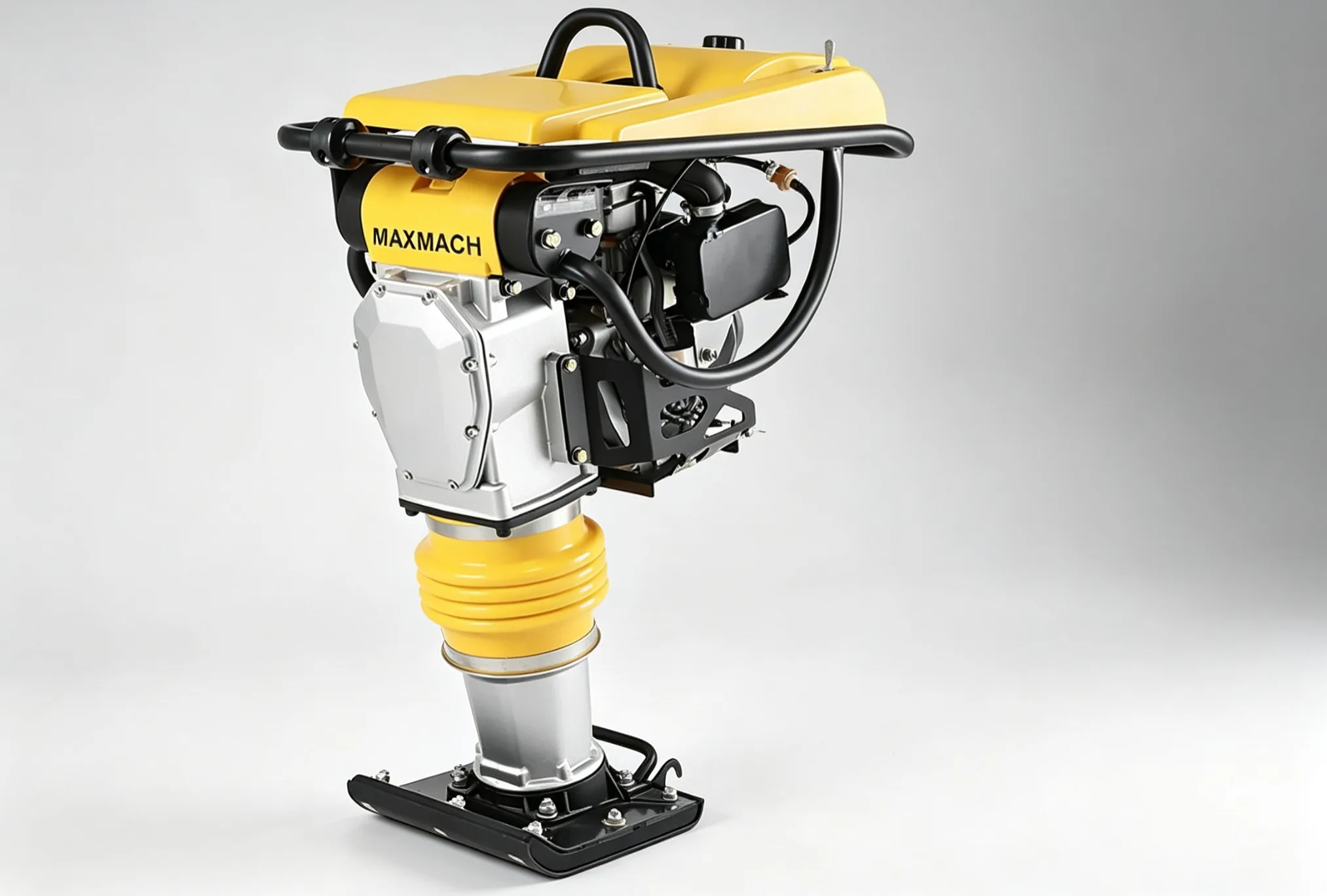
The best tamping rammer machine for roadside trench compaction is the one that can work inside the trench without bridging over the edges. Narrow utility trenches, curb cuts, shoulder repairs, and pipe backfill areas often leave too little working width for a plate compactor to build uniform pressure at the sides. A trench rammer concentrates force into a smaller shoe area, which helps the material knit together layer by layer instead of merely vibrating the top surface.
That distinction matters because trench backfill failures usually begin at the edges, where poor confinement and insufficient lift compaction create settlement paths. In roadwork, settlement is expensive: a small depression can lead to water infiltration, repeated patching, and traffic complaints. For that reason, crews often use a tamping rammer for the tightest zones and a plate compactor for open lifts once clearance improves.
| Machine type | Typical working zone | Best material | Primary advantage | Limitation |
|---|---|---|---|---|
| Tamping rammer | Narrow trenches, edges, utility cuts | Cohesive and mixed backfill | High impact in confined space | Slower on open areas |
| Plate compactor | Road shoulders, subbase, wider backfill | Granular and blended fills | Higher coverage rate | Poor sidewall access |
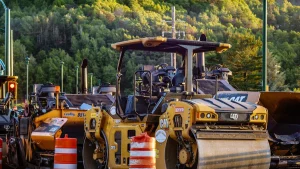
| Walk-behind roller | Open lanes, larger patches | Base and subbase layers | Productive on broad surfaces | Cannot enter narrow trenches |
Why Roadside Trench Compaction Needs a Different Approach
Roadside trench compaction is harder than general site compaction because the work zone is constrained, the surface is already disrupted, and the finish needs to support traffic load quickly. A trench beside a roadway also has uneven side support, changing moisture content, and a higher risk of overcompaction near buried utilities or weak compaction near the trench wall. That combination means the crew needs controlled energy, not just more machine weight.
Most specifications for road repairs require compacted backfill to meet project density targets, commonly expressed as a percentage of maximum dry density determined in the lab. The standard laboratory reference for soil compaction is ASTM D698 for the Standard Proctor test and ASTM D1557 for the Modified Proctor test. In practice, many civil contracts specify field compaction targets around 95% of the applicable laboratory maximum dry density, but the exact requirement should always follow the project documents. The machine must therefore support repeatable lift-by-lift densification, especially in the top layers where settlement becomes visible fastest.
| Reference | What it measures | Why it matters in trench work |
|---|---|---|
| ASTM D698 | Standard Proctor maximum dry density | Baseline for common fill compaction targets |
| ASTM D1557 | Modified Proctor maximum dry density | Used when higher compaction energy is required |
| ASTM D6938 | In-place density with nuclear gauge | Fast field verification of achieved density |
| ASTM D1556 | Sand cone field density | Alternative verification method for compacted fill |
How to Choose the Best Trench Rammer for Your Jobsite
The best trench rammer for a roadside crew is usually the machine that balances impact force, shoe size, and operator control. Higher engine output is useful, but it does not automatically mean better compaction in a narrow cut. What matters more is the machine’s ability to transmit repeated impacts evenly without bouncing out of position or damaging the trench wall.
Engine class is still important because it affects endurance, fuel consumption, and maintenance intervals. Many gasoline-powered trench rammers used in light civil work fall in the 2 to 5 hp class, while heavier-duty compactors may use larger engines for longer run time. Some site managers prefer gasoline for mobility and ease of refueling, while others choose diesel where fuel logistics and runtime are more important. The right decision depends on the trench environment, not on engine type alone.
| Selection factor | Practical guidance | Why it matters |
|---|---|---|
| Trench width | Choose a shoe that leaves room for sidewall clearance | Prevents bridging and missed edges |
| Soil type | Use impact compaction for cohesive or mixed fill | Improves particle rearrangement |
| Lift thickness | Compact in thin lifts instead of thick placements | Reduces trapped voids |
| Operator control | Prefer balanced weight and stable handle response | Improves accuracy in tight areas |
| Maintenance access | Check air filter, bellows, and shoe wear points | Reduces downtime on mobile repair work |
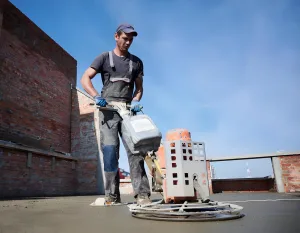
If your work also includes wider shoulder repairs or patch zones, pairing the rammer with a road cutter for clean trench edges and a power trowel for adjacent slab finishing can improve the overall repair sequence. A good equipment plan is not one machine for every task; it is a controlled process from cutting to backfill to surface restoration.
What Soil Conditions Favor a Tamping Rammer Machine
A tamping rammer performs best when the fill has enough cohesion to respond to repeated impact and enough moisture to compact without pumping. Mixed backfill, clayey sand, silty clay, and utility trench blends often respond better to a rammer than to a vibrating plate, especially when the trench is deep and the walls limit lateral movement. In contrast, clean granular material in a wider excavation can often be compacted faster with a plate compactor.
Soil moisture is a major driver of field success. Too dry, and the material resists densification; too wet, and the fill may deflect or soften under repeated blows. The practical target is to place fill near the optimum moisture range identified in the lab compaction curve, then compact in controlled lifts. That approach reduces rework and helps the crew reach density faster with fewer passes.
- Use a tamper when access is limited and sidewall compaction is critical.
- Use thinner lifts when the backfill includes fines or variable moisture.
- Check for soft spots after each lift before placing the next layer.
- Avoid sealing moisture out of the trench with overly fast surface compaction.
Field Workflow for Roadside Trench Compaction
The best field results come from a simple sequence: clean cut, controlled fill, measured compaction, and immediate verification. In roadside work, rushed backfill is one of the most common causes of later settlement. The crew should place material evenly, compact each lift, and confirm that the trench is not developing voids near the curb or pavement edge.
A well-managed workflow also reduces machine abuse. Operators who try to force a trench rammer through thick lifts often overwork the engine, increase shoe wear, and leave uncompressed pockets in the lower layer. A more efficient approach is to compact in passes that are consistent, overlapping, and visually traceable.
- Inspect the trench for unstable sidewalls, water, or debris.
- Place backfill in thin, even lifts according to the project spec.
- Compact from the edges toward the center to reduce side voids.
- Verify density with a field test method such as ASTM D6938 or ASTM D1556.
- Repair the surface only after the target density has been achieved.
| Workflow stage | Common mistake | Better practice |
|---|---|---|
| Backfill placement | Dumping all material at once | Place uniform lifts |
| Compaction | Using too few passes | Use repeatable overlapping passes |
| Verification | Relying on visual inspection only | Use density testing |
| Surface restoration | Finishing before settlement risk is removed | Complete after compaction is proven |
Technical Specs That Matter in a Tamping Rammer
The best tamping rammer machine for roadside trench compaction is defined by a few technical numbers that directly affect field control. Impact frequency, shoe size, operating weight, and travel responsiveness matter more than decorative features. Some compact rammers used in road repair work operate with a frequency around 600 to 700 blows per minute, which helps the machine deliver rapid energy transfer in small areas. Exact values vary by model, but the user should look for a stable, repeatable cadence rather than peak speed alone.
Operators also need a machine that is manageable during long shifts. A lighter rammer can be easier to maneuver in roadside cuts and around traffic-control barriers, while a heavier unit may help when the trench material is difficult to densify. Balance is the deciding factor: too light, and the machine skips; too heavy, and it becomes hard to position precisely in a narrow opening.
| Spec | Typical field relevance | What to check |
|---|---|---|
| Impact frequency | Energy transfer rate | Consistency under load |
| Shoe width | Coverage in narrow trenches | Edge access and overlap |
| Operating weight | Operator control and penetration | Ease of handling on roadside slopes |
| Power source | Fuel logistics and runtime | Gasoline or diesel availability |
For contractors building a fleet, it can be useful to compare a rammer against other site machines such as concrete mixers for patch preparation and plate compactors for broader base areas. The most productive fleets are usually mixed fleets, not single-purpose fleets.
Common Errors in Roadside Trench Compaction
Most trench compaction failures come from process errors, not from the machine itself. The most common problem is placing fill too thick for the equipment to densify fully. Another frequent issue is using a plate compactor where the trench is too narrow for the edges to receive uniform energy. A third mistake is skipping density verification because the surface looks firm after one or two passes.
Moisture error is equally important. Dry backfill can appear stable during compaction and still settle later once traffic loads or rainfall change the moisture state. Wet fill can seem workable but fail to build proper shear strength. A reliable crew treats moisture control as part of compaction, not a separate step.
- Do not compact thick lifts just to save time.
- Do not assume a firm surface means full-depth density.
- Do not ignore sidewall zones near the trench edge.
- Do not leave surface restoration until settlement starts.
Safety and Compliance for Trench Rammer Work
Safety is a core part of machine selection because roadside trench work combines moving equipment, open excavations, and public traffic exposure. OSHA excavation guidance at OSHA Excavations emphasizes protective systems, soil classification, and safe access, all of which affect how and when a trench rammer can be used. In practice, a compact machine with predictable handling is often safer than a heavier tool that is difficult to control near an edge.
Contractors should also consider noise, vibration exposure, and operator fatigue during long repair shifts. A machine that is easy to start, steady in motion, and simple to service is more likely to be used correctly. That matters because the best equipment in a truck bed is not useful if the crew avoids it due to difficult handling.
Buying Guidance for Contractors and Distributors
The best tamping rammer machine for roadside trench compaction is also the best machine to keep running in the field. Buyers should evaluate spare parts access, wear-item replacement, and service support alongside technical performance. For distributors, the selling point is not only the rammer itself but the fact that it fits a wider road-repair workflow that may also include cutting, patching, and surface finishing equipment.
For international buyers, that workflow thinking is especially important because road maintenance teams often need a compact power lineup for different jobsite conditions. A practical equipment partner is one that can support trench compaction, edge cutting, and restoration in one procurement cycle. That is why product families such as plate compactors, road cutters, and power trowels matter as much as the rammer itself in buying decisions.
FAQ About Tamping Rammer Machine for Roadside Trench Compaction
Is a tamping rammer better than a plate compactor for narrow trenches?
Yes, a tamping rammer is usually better in narrow trenches because it can reach tight edges and concentrate impact in confined spaces where a plate cannot maneuver effectively.
What soil is best for a trench rammer?
A trench rammer is especially effective on cohesive and mixed backfill, where repeated impact helps break up voids and improve density.
How do I know if the trench is compacted enough?
The reliable method is field testing, such as ASTM D6938 or ASTM D1556, rather than visual appearance alone.
What compaction target is commonly used in road repair?
Many projects use density targets around 95% of the applicable laboratory maximum dry density, but the contract documents control the actual requirement.
Can one machine handle both trench and open-area compaction?
A tamping rammer can handle trenches very well, but open areas are usually faster with a plate compactor or roller.
What maintenance points matter most on a tamper?
Air filter condition, bellows wear, shoe wear, and engine starting performance are the main items to inspect regularly.
How should a contractor choose between gasoline and diesel?
Choose gasoline for easy mobility and refueling, and diesel when runtime and site fuel planning matter more.