- OEM sourcing works best when the factory can tailor the power trowel to slab size, finish level, and site conditions.
- International buyers should verify export documentation, spare parts support, and consistent build quality before placing volume orders.
- Technical choices such as blade count, disc size, engine power, and operating speed directly affect surface quality and labor cost.
- For contractor use, the right power trowel should reduce rework, shorten finishing time, and improve flatness consistency.
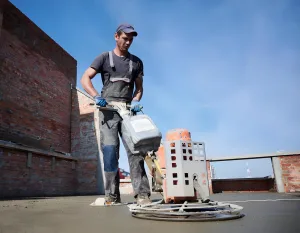
China power trowel factory sourcing has become a practical route for contractors who need reliable finishing equipment, especially for warehouse floors, parking lots, municipal slabs, and industrial concrete work. In modern floor construction, finish timing is tight: concrete surface work often starts during the finishing window, and surface quality can be influenced by factors such as bleed water removal, evaporation rate, and machine control. For example, ASTM F1860 defines a standardized test method for concrete floor flatness and levelness profiles, while NRMCA guidance on concrete finishing emphasizes that finishing should not begin until bleed water has dissipated. A capable OEM power trowel supplier should therefore support more than a machine spec sheet: it should help buyers match site needs with the right finishing configuration, whether that means a walk-behind unit for tight indoor work or a ride-on model for large slabs.
China Power Trowel Factory: What International Contractors Should Expect
A serious China power trowel factory should be able to supply both standard units and OEM power trowel variants with clear technical documentation. In export purchasing, that usually means defined engine options, blade diameter choices, safety devices, packaging standards, and spare part availability. Many contractors also need custom concrete trowel configurations for different slab sizes, which is why product flexibility matters. If a supplier only offers generic catalog models, it may be harder to optimize for regional fuel availability, worker familiarity, or local maintenance capacity.
For buyers focused on concrete floor finishing, one practical benchmark is working efficiency rather than marketing claims. Walk-behind trowels commonly use blade diameters around 36 to 46 inches, while ride-on units often exceed 60 inches for larger pours; the exact size depends on the project scale and maneuvering space. Engine output also matters because insufficient power can create surface chatter, slow finishing, or uneven burnishing. A factory that understands contractor pain points will discuss torque, blade pitch adjustment, and machine balance, not just horsepower.
| Buyer Requirement | Why It Matters | Typical OEM Decision | Project Impact |
|---|---|---|---|
| Small indoor slab | Tight maneuvering | Walk-behind, compact frame | Less edge damage, easier transport |
| Large warehouse floor | High output finishing | Ride-on, larger blade diameter | Faster coverage, lower labor hours |
| Regional fuel constraints | Maintenance simplicity | Gasoline or diesel option | Better field uptime |
| Distributor resale | Market differentiation | Custom paint, logo, package | Stronger local positioning |
OEM Power Trowel vs Standard Model: The Real Difference
An OEM power trowel is valuable when the contractor needs controlled adaptation instead of cosmetic branding. The difference is not only the logo on the frame; it is the ability to adjust features such as engine brand, blade set, safety shutdown, handle layout, and packaging configuration. In practical terms, that can determine whether the machine is easy to service locally, whether operators trust the controls, and whether the dealer can keep parts in stock.
From a procurement perspective, the best OEM concrete trowel programs are built around repeatable specifications. Buyers should ask for a clear bill of materials, sample photos, torque and speed details, and a pre-shipment inspection process. If a supplier cannot document these basics, the long-term cost of ownership may rise through hidden warranty claims, delayed deliveries, or inconsistent field performance.
| Feature | Standard Model | OEM Power Trowel | Contractor Benefit |
|---|---|---|---|
| Branding | Fixed | Custom logo and color | Dealer identity |
| Engine options | Limited | Multiple fuel choices | Local market fit |
| Control layout | Fixed | Adjustable by request | Operator comfort |
| Packaging | Generic | Retail or project-ready | Lower damage risk |
| Spare parts plan | Basic | Custom spare kit | Less downtime |
For international buyers, OEM flexibility also supports compliance planning. If you sell into multiple countries, it is easier to manage service when the factory can produce a stable configuration, keep revision control, and provide documentation in English. That is especially important when the power trowel is part of a wider equipment line that may include concrete mixers, plate compactors, and floor grinders for a complete slab and surface workflow.
How to Choose a Custom Concrete Trowel for Your Market
A custom concrete trowel should be selected by jobsite reality, not by catalog appearance. The most useful choice depends on slab thickness, pour size, access width, operator experience, and the required finish quality. Indoor distribution centers usually need smoother control and lower emissions exposure, while outdoor paving and patchwork jobs may prioritize rugged frame design and fuel flexibility.
Concrete surface work is time-sensitive because the finishing window is narrow. According to NRMCA guidance, finishing should begin after bleed water is gone, and surface evaporation can accelerate under hot, windy, or low-humidity conditions. That means a contractor may need a power trowel that is easy to start, easy to maneuver, and predictable under changing site conditions. A well-matched machine can reduce rework and help maintain slab consistency across shifts.
- Match machine size to slab area and access width.
- Choose engine type based on fuel availability and maintenance capacity.
- Check blade system compatibility for local wear parts sourcing.
- Request a sample unit or video inspection before bulk order.
- Confirm spare parts, warranty terms, and export packing details.
| Selection Factor | Small Contractor Job | Mid-size Commercial Job | Large Industrial Job |
|---|---|---|---|
| Blade diameter | 36-40 in | 36-46 in | 46-60+ in |
| Machine type | Walk-behind | Walk-behind or ride-on | Ride-on |
| Priority | Control | Balance | Coverage speed |
| Transport | Pickup-friendly | Forklift or small truck | Site delivery |
Technical Specs That Matter in a Power Trowel
Technical specifications matter because they influence actual finishing results, not just purchase price. A buyer comparing power trowels should review blade size, engine output, rotor stability, safety controls, and service access. Even small changes in operating geometry can affect how the machine responds on fresh concrete, especially when the slab is large or the surface is partially set.
In commercial practice, walk-behind units are often chosen for tighter spaces and edge work, while ride-on models are used to finish larger floors faster. Industry sources also emphasize control during the timing of finishing. The NRMCA notes that early finishing over bleed water can trap water beneath the surface, weakening the top layer. That is why a machine with stable pitch control and consistent operator feel can be as important as raw power.
| Spec Item | Common Range | Why It Matters |
|---|---|---|
| Blade diameter | 36-60+ in | Coverage rate and maneuverability |
| Engine output | 5-35 hp | Torque under load |
| Operating style | Walk-behind / ride-on | Labor requirement and productivity |
| Fuel type | Gasoline / diesel | Site compatibility and maintenance |
| Safety features | Dead-man switch, emergency stop | Operator protection |
If your projects also involve floor prep and finishing at scale, equipment coordination becomes important. A contractor may use a road cutter for joints and repair cuts, then move to a ride-on power trowel for large slab finishing. That workflow reduces downtime between stages and helps the site crew stay aligned with the concrete setting schedule.
Why Safety and Service Should Be Part of Factory Evaluation
Safety and service are not optional extras in OEM procurement; they are part of product quality. A power trowel is a rotating finishing machine, so operator protection, dead-man control, and emergency stop response directly affect field risk. If the factory cannot explain how the machine stops, how the blade guard is designed, or how wear parts are replaced, the product may be hard to support overseas.
Service matters because international contractors often work under tight delivery windows. A supplier that can offer spare blade sets, belts, filters, and handles in a standard kit can reduce downtime after arrival. For distributors, that also means lower warranty friction and better repeat business. In the industrial equipment market, uptime is often more valuable than a slightly lower unit price.
- Ask for pre-shipment inspection photos and test records.
- Confirm the spare parts list before final payment.
- Verify packing strength for sea freight and inland handling.
- Request English manuals and maintenance schedules.
Comparing China OEM Power Trowel Factories for Export Orders
Not every China OEM power trowel factory is equally prepared for export. The most dependable suppliers usually show consistent model structure, responsive communication, and the ability to manage both custom and repeat orders. Buyers should compare the factory by process maturity, not only by quotation. A lower price can become expensive if the machine requires rework, parts replacement, or delayed shipment.
For international contractors and regional dealers, the strongest suppliers are the ones that can support long-term SKU consistency. That means the same frame, the same wear parts, and a stable documentation package across multiple orders. It also means the factory can adapt to different markets without breaking the basic product architecture. In that sense, OEM is not just custom manufacturing; it is controlled customization.

| Factory Checkpoint | Pass Indicator | Risk if Missing |
|---|---|---|
| Quality control | Incoming, in-process, final inspection | Inconsistent field performance |
| Documentation | Manuals, parts list, spec sheet | Service confusion |
| Export readiness | Packing, labeling, shipping support | Transit damage or customs delay |
| Customization | Logo, color, engine, packaging | Weak market differentiation |
| After-sales support | Response window and parts supply | High downtime |
For buyers building a broader product portfolio, it helps if the supplier can align multiple machines for one project type. A contractor handling road maintenance may need concrete cutting machines, line striping equipment, and a custom concrete trowel from the same channel. That simplifies purchasing, packaging, and service coordination.
Field Scenarios: Where OEM Power Trowel Sourcing Pays Off
The most convincing reason to source from a China power trowel factory is project fit. In warehouse flooring, the contractor needs broad coverage and stable finish quality. In parking lots, the crew may need equipment that can move quickly between sections. In municipal repair work, portability and easy maintenance often matter more than raw size.
Real procurement value appears when the machine supports the job rhythm. A walk-behind unit may be the correct answer for smaller subcontractors who work on multiple sites in a week, while a ride-on model can be the better choice for floor specialists who need higher coverage on larger pours. If your operation also includes surface grinding or repair prep, integrating the trowel with a broader finishing line improves project continuity.
- Warehouse slabs: prioritize coverage, control, and operator comfort.
- Parking structures: prioritize maneuverability and compact storage.
- Municipal repair: prioritize fast deployment and simple service.
- Dealer inventory: prioritize standard parts and stable model naming.
Practical Buying Checklist for International Contractors
A disciplined buying checklist reduces sourcing risk and improves long-term resale value. Before approving an OEM power trowel order, buyers should confirm the machine’s functional scope, packaging standard, service plan, and spare parts support. This is especially important when buying across time zones and managing import deadlines.
Use the following checklist to avoid common sourcing mistakes. It is better to spend an extra day reviewing documents than to spend weeks fixing avoidable defects after shipment.
- Confirm machine type, blade size, and engine option in writing.
- Request photos of all major assemblies, not only the finished unit.
- Ask for a spare parts bundle and a maintenance list.
- Verify shipping marks, carton strength, and pallet dimensions.
- Clarify warranty scope, lead time, and replacement procedure.
FAQ on China OEM Power Trowel Factory Sourcing
What should I ask a China power trowel factory before ordering?
Ask for technical specs, spare parts availability, customization options, lead time, warranty terms, and export packing details. A reliable supplier should also explain how the machine is tested before shipment.
Is an OEM power trowel better than a standard model?
An OEM power trowel is better when you need market-specific configuration, dealer branding, or local service compatibility. A standard model is usually simpler, but it may not fit your market as well.
How do I choose the right custom concrete trowel size?
Choose by slab area, access width, and finishing target. Smaller jobs usually need walk-behind units, while large commercial floors often benefit from larger blade coverage and ride-on control.
What safety features matter most on a power trowel?
Emergency stop, operator presence control, stable guard design, and predictable throttle response are the key safety features. These reduce the chance of loss of control during finishing.
How can I reduce downtime after import?
Order a spare parts kit, confirm the maintenance schedule, and request English manuals. It also helps to standardize one model across your first purchase batch.
Can one supplier support both trowels and other concrete equipment?
Yes, and that can simplify procurement. Many contractors prefer a supplier that also offers plate compactors, rammers, and concrete cutters for a complete site workflow.
What is the biggest mistake in OEM sourcing?
The biggest mistake is buying by price alone. Without documentation, spare parts planning, and quality checks, a cheap unit can become costly over its first year of use.
For contractors and distributors, the best China OEM power trowel factory is the one that combines practical customization, stable manufacturing, and export support. That combination is what turns a machine purchase into a dependable finishing solution.