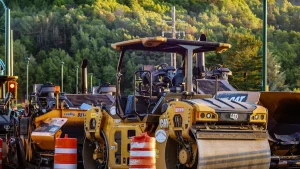
- Concrete mixer machines improve material uniformity, which is critical for strength, durability, and finish quality.
- The right construction mixer choice depends on job size, power source, mobility needs, and daily output.
- Mixing quality affects downstream work such as placement, compaction, curing, cutting, and surface finishing.
- Contractors can reduce labor bottlenecks by matching mixer capacity to pour volume and site access constraints.
- Standards and testing methods, including ASTM C143/C143M and NIST guidance on concrete performance, help keep mixing and testing decisions grounded in measurable outcomes.
Concrete mixer machines are essential for building construction because concrete quality is determined long before finishing begins, and even a small deviation in uniformity can affect strength, workability, and long-term durability. In production terms, fresh concrete is usually evaluated for consistency with the slump test under ASTM C143/C143M, while air content and compressive strength are checked through standard field and laboratory procedures. For many commercial and residential projects, the practical goal is not simply to mix materials; it is to deliver repeatable batches that can be placed and compacted without segregation. That is why contractors, distributors, and project managers increasingly view the concrete mixer as a quality-control tool rather than a commodity machine.
Why concrete mixer machines matter in building construction
Concrete mixer machines matter because they turn raw materials into a consistent construction material that can be placed efficiently and cured correctly. A manual mix may work for very small jobs, but once a project needs multiple batches, different labor crews, or faster placement windows, consistency becomes the main risk. The mixer reduces variability in aggregate distribution, cement coating, and water dispersion, which is especially important when the same pour must support columns, slabs, footings, or masonry work.
Construction teams also depend on predictable batching to avoid cold joints and surface defects. In a typical slab or footing operation, the crew cannot afford batch-by-batch changes in texture or workability because that creates downstream problems during screeding and finishing. In that sense, the building construction mixer is part of the structural quality chain, not just a preparation step.
Concrete mixer, building construction, and the quality chain
The concrete mixer sits at the start of the quality chain, and every later step inherits its output. If the mix is too dry, placing becomes difficult; if it is too wet, segregation and shrinkage risk increase. If the batch is uneven, the structure may still look acceptable on day one but perform poorly after curing, load transfer, and exposure cycles.
For contractors, this matters because concrete is a system, not a single material. Cement, aggregates, water, and admixtures must be combined in a way that preserves the intended water-cement ratio and workability. The mixer helps make that process repeatable, which is essential when multiple workers, variable site conditions, and tight schedules all affect the pour.
| Jobsite factor | Why the mixer matters | Typical risk without a proper mixer | Measurable control point |
|---|---|---|---|
| Batch uniformity | Even distribution of cement and aggregate | Segregation, weak zones, finish defects | Slump consistency per batch |
| Placement speed | Supports faster, continuous pours | Cold joints, crew idle time | Batch cycle time in minutes |
| Material handling | Reduces manual shoveling and rework | Labor strain, inconsistent mixing | Labor hours per cubic meter |
| Project quality | Improves downstream finishing and curing | Cracking, honeycombing, patching | Rejected batches or rework rate |
How a construction mixer improves output on real jobs
A construction mixer improves output by reducing the hidden time losses that appear on active job sites. The most obvious gain is speed, but the more important gain is coordination: the crew can plan around a stable flow of fresh concrete instead of waiting for the next inconsistent batch. On foundation work, that means faster placement into forms. On slab work, it means fewer interruptions between screeding, floating, and finishing.
In field practice, the mixer also improves material economy. When batches are consistent, crews are less likely to add water on the spot or discard partially mixed loads. That helps protect the intended mix design and reduces waste. For distributed worksites such as residential developments, small commercial projects, and repair crews, this is often the difference between meeting the day’s target and returning with unfinished work.
For mobile contractors, compact and easy-to-operate machines are especially valuable because access is often constrained. That is why many teams pair a mixer with a small footprint workflow and nearby support equipment such as rammers for trench edges, floor grinding machines for surface preparation, and trowel machines for finishing large slab areas.
Choosing the right concrete mixer machine for building construction
The right concrete mixer machine depends on site size, batch volume, mobility, and power availability. Contractors should not select a mixer only by drum size; they should match output to pour rhythm, labor count, and material delivery method. A small crew doing patch repairs has different needs from a contractor pouring a warehouse slab or a foundation line.
Power source also matters. Gasoline and diesel models can suit outdoor or utility-limited sites, while electric units are attractive where emissions, noise, or indoor ventilation matter. In international procurement, the selection decision often includes serviceability, spare parts access, and ease of transport because downtime is costly when projects are spread across multiple sites.
| Selection factor | Small repair crew | Residential build | Commercial slab work |
|---|---|---|---|
| Typical batch need | Low | Medium | High |
| Mobility priority | Very high | High | Medium |
| Power preference | Gasoline | Gasoline or electric | Diesel or high-output electric |
| Primary goal | Fast field repairs | Balanced productivity | Continuous production |
| Support equipment | plate compactor | impact rammer | concrete vibrator |
In practical purchasing, one useful rule is that the mixer should support the crew’s fastest realistic pour pace, not the maximum theoretical output. If the mixer is too small, the pour stalls. If it is too large for the crew or site layout, material sits too long, handling becomes inefficient, and fresh concrete quality can drift. The best choice is the one that keeps the entire work sequence balanced.
Standards, testing, and the numbers that matter
The best concrete mixer decisions are tied to measurable standards, not impressions. Fresh concrete workability is commonly checked with the slump test under ASTM C143/C143M, while aggregate and material quality are guided by standards such as ASTM C33/C33M for concrete aggregates. These standards matter because a mixer can only perform well if the input materials and testing process are controlled.
NIST also emphasizes the importance of material performance measurement in concrete durability and strength assessment, reinforcing the idea that mixing quality must be verified rather than assumed. In the field, this means contractors should monitor batch consistency, water addition, and placement timing, then compare the result against the project’s acceptance criteria.
Quantitatively, common concrete testing practices rely on numeric targets such as slump range, compressive strength at 7 and 28 days, and mix water control. While the exact design varies by project, the point is universal: a mixer that supports stable, repeatable batching directly improves the chance of passing these tests the first time.
| Standard or metric | What it controls | Why it matters in construction | Reference |
|---|---|---|---|
| ASTM C143/C143M | Slump test procedure | Workability and placeability | ASTM |
| ASTM C33/C33M | Aggregate requirements | Gradation and quality of mix ingredients | ASTM |
| Compressive strength | Project acceptance criterion | Structural performance after curing | NIST |
| Batch control | Water and material ratio | Consistency and durability | Field QA/QC practice |
Building construction workflow: where the mixer saves time
The mixer saves the most time when it is integrated into the full construction workflow instead of treated as a standalone machine. On a foundation job, the sequence usually runs from material staging to mixing, transport, placement, vibration, and finishing. If the mixer output is irregular, every later stage slows down. If the output is stable, the crew can keep a tight rhythm and reduce idle time.

This is especially visible in mixed-scope crews that also handle surface preparation and finishing. A site may need a mixer in the morning, then a cutter for joint work, then a trowel machine for finishing, and finally a compaction tool for adjacent prep work. That is why many contractors prefer suppliers with a broader construction equipment portfolio rather than a single-machine focus. The workflow connection between concrete cutting machine, trowel machine, and mixer is often what determines overall project efficiency.
- Stage aggregates, cement, water, and admixtures close to the mixing point.
- Run the mixer with a consistent loading sequence to reduce dead zones.
- Check workability before placement using the project’s slump target.
- Coordinate placement so fresh concrete enters forms without unnecessary delay.
- Finish and cure promptly to preserve surface quality and strength gain.
Common mistakes when using a construction mixer
Most mixer-related problems come from process errors, not from the machine alone. The most common mistake is overloading the drum, which lowers mixing efficiency and can leave pockets of unmixed material. Another frequent issue is adding water on site to improve flow, which can weaken the final concrete and alter the designed water-cement ratio.
A third mistake is poor maintenance. Residual concrete buildup changes effective drum volume and can contaminate later batches. Worn blades, damaged drive components, and poor cleaning routines also reduce output quality. For contractors who use mixers daily, a short cleaning and inspection routine is a low-cost way to protect performance.
- Avoid batching beyond the machine’s realistic working capacity.
- Do not change mix water casually on site without QA/QC approval.
- Clean the drum and blades after each shift to prevent buildup.
- Check fuel, belts, fasteners, and guards before every use.
- Keep spare wear parts available when the machine is used for recurring pours.
How concrete mixer machines support durability and cost control
Concrete mixer machines support durability because well-mixed concrete is less likely to show segregation, honeycombing, or inconsistent curing behavior. These defects are not cosmetic only; they can create weak points that affect load transfer and service life. For that reason, many project teams view the mixer as a cost-control tool as much as a production tool.
Cost control appears in three places: reduced labor waste, reduced rework, and fewer rejected pours. Even when a project budget is tight, a dependable mixer can lower the hidden cost of delays and patch repairs. In repeated-use environments such as housing developments, parking structures, and municipal maintenance, those savings compound over time.
Industry estimates suggest that even modest reductions in rework can materially improve crew productivity, especially when concrete work is tied to tight finishing windows. The exact savings depend on scale, labor rate, and transport distance, but the mechanism is consistent: stable mixing reduces instability everywhere else.
FAQ about concrete mixer machines in building construction
1. Why is a concrete mixer better than hand mixing for construction?
A concrete mixer is better because it produces more consistent batches, reduces labor strain, and improves placement quality. Hand mixing is acceptable only for very small jobs, while construction work usually needs repeatable output and predictable workability.
2. What should I check before buying a construction mixer?
You should check drum capacity, power source, portability, service access, and whether the machine fits your typical batch size. It also helps to compare maintenance simplicity and how easily the mixer can be transported between sites.
3. How does mixer quality affect concrete strength?
Mixer quality affects how evenly cement, aggregates, water, and admixtures are distributed. Poor mixing can create weak zones, segregation, and inconsistent curing, which may reduce compressive strength and durability.
4. Is a gasoline or diesel mixer better for building construction?
The better choice depends on the site. Gasoline mixers are often easier for smaller mobile crews, while diesel units may suit heavier-duty use and longer operating schedules. Site energy access and maintenance support matter too.
5. How do I know if the mix is ready to place?
The most common field check is the slump test under ASTM C143/C143M, combined with visual inspection for uniformity and proper workability. The batch should match the project’s specified range before placement begins.
6. Can one mixer serve both foundations and slab work?
Yes, if the capacity and output rate match the job schedule. Many contractors use one machine across multiple tasks, but they still need to align batching speed with the pour sequence and crew size.
7. What maintenance keeps a construction mixer reliable?
Regular cleaning, inspection of wear parts, lubrication where required, and pre-start checks are the most important steps. A clean mixer maintains effective volume and reduces contamination between batches.
For contractors, dealers, and project teams, the real value of concrete mixer machines is not just that they mix materials; it is that they stabilize the entire construction process. When the batch is consistent, the crew can place, compact, finish, and cure with fewer disruptions. That is why the mixer remains one of the most essential tools in building construction, especially on sites where productivity, quality, and repeatability all matter at the same time.