
- Fuel consumption should be evaluated alongside compaction output, not in isolation.
- Short trench work often rewards lighter, easier-to-start gasoline units, while longer duty cycles may favor diesel.
- Real savings come from matching machine weight, shoe size, and lift depth to the job, reducing rework and idle time.
- Standards such as ISO 28927-8 and OSHA hand-arm vibration guidance matter because vibration exposure and operator fatigue influence productivity and fuel use.
Tamping rammer fuel consumption is one of the most overlooked cost drivers in trench backfill, utility repair, and small-area compaction, even though compaction quality directly affects pavement life and rework risk. A well-selected rammer can help a crew keep lift thickness controlled and achieve consistent density, while poor matching increases passes, idle time, and fuel burn. For equipment buyers comparing site equipment lines, the smartest buying decision is to judge fuel use against compaction performance, engine class, and maintenance burden. The U.S. EPA notes that small spark-ignition engines are regulated under emission standards for nonroad equipment, making engine type a meaningful factor in both operating cost and compliance planning EPA nonroad spark-ignition engine standards.
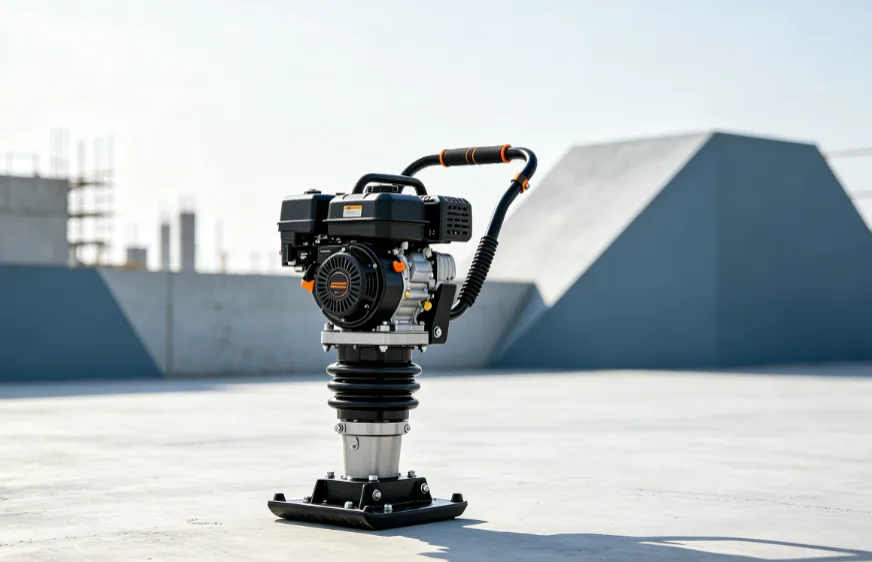
Tamping rammer fuel consumption: what buyers should measure first
Fuel consumption is only useful when it is tied to a defined work cycle. The correct question is not just how much fuel a tamping rammer uses, but how much compacted output it delivers per liter.
For buyer evaluation, measure three variables on the same job: average liters per hour, effective compaction area per hour, and number of passes needed to reach specification. That approach exposes the real operating cost better than engine displacement alone.
| Buyer metric | Why it matters | How to measure |
|---|---|---|
| Liters per hour | Shows direct fuel burn | Refuel after a timed shift |
| Compacted area per hour | Shows output efficiency | Track trench length or pad area completed |
| Pass count to target density | Shows rework risk | Record passes by lift and soil type |
| Idle ratio | Shows wasted fuel | Estimate idle minutes per hour |
In compaction work, the practical winner is usually the machine that completes the required density with fewer total passes, even if its headline fuel consumption is slightly higher. That is because fuel is only part of the cost stack; labor, waiting time, and rework often exceed the machine’s hourly fuel bill.
Gasoline vs diesel tamping rammer fuel consumption
Engine type strongly influences daily fuel cost, startup behavior, and service complexity.
Gasoline tamping rammers are typically easier to start, lighter to move, and more convenient for short, dispersed repair jobs. Diesel-powered units often make more sense for longer runtime, heavier duty cycles, or buyers who prioritize fuel economy over portability.
| Factor | Gasoline rammer | Diesel rammer |
|---|---|---|
| Typical use case | Utility repair, patching, small trench work | Long shifts, repetitive backfill, rental fleets |
| Startup behavior | Fast and simple | More dependent on maintenance and temperature |
| Fuel system | Simpler, lighter | Heavier, often more efficient in continuous work |
| Maintenance profile | Lower complexity | Higher torque utility, but more service sensitivity |
| Buyer priority | Mobility and convenience | Operating economy and duty cycle |
For many contractors, the decision is driven by job rhythm. If the crew is moving from one cut to another, the time spent transporting and restarting equipment can outweigh the fuel difference. If the machine runs continuously on dense backfill, the engine’s fuel efficiency becomes more important.
How soil type changes rammer fuel use
Soil conditions can change fuel consumption more than many buyers expect.
Granular soils like sand and gravel usually compact faster than cohesive clay, while moisture content can either help or hurt compaction depending on how close the material is to optimum moisture content. When moisture is too low, the rammer needs more passes; when it is too high, the soil may pump or rebound, again increasing fuel use.
| Material condition | Compaction behavior | Fuel impact |
|---|---|---|
| Dry granular fill | Often compacts quickly | Lower passes, lower burn |
| Moist cohesive clay | Can be difficult to densify | Higher passes, higher burn |
| Over-wet fill | May rebound or pump | Fuel rises due to rework |
| Layer too thick | Lower energy transfer to depth | More cycles and wasted fuel |
A useful compaction reference point is that field density testing is commonly benchmarked against laboratory maximum dry density, often determined with ASTM D1557 for modified Proctor testing or ASTM D698 for standard Proctor testing ASTM D1557 and ASTM D698. When the lift thickness and moisture content are wrong, fuel use rises because the rammer is forced to work against the material rather than through it.
Fuel consumption, vibration, and operator efficiency
Operator fatigue is a hidden fuel-cost variable because tired operators slow down, pause more often, and create uneven coverage.
Vibration exposure matters for both safety and productivity. ISO 28927-8 covers hand-held power tools, including engine-driven impact-type tools, and OSHA also provides guidance on hand-arm vibration risks ISO 28927-8 and OSHA hand-arm vibration. Lower vibration does not directly guarantee lower fuel consumption, but it can help operators maintain consistent pace and reduce unnecessary idle periods.
That matters in trench work, where a small slowdown in compaction can cascade into delays for pipe laying, backfill testing, and surface restoration. Better ergonomics can therefore improve both the fuel profile and the overall job schedule.
What buyers should ask before comparing tamping rammer fuel numbers
The best comparison method is a structured buyer checklist.
- What is the machine’s average fuel use under load, not just at no-load idle?
- How many passes are required on the typical site material?
- What shoe size and impact frequency are matched to the trench width?
- How easy is daily inspection of air filters, spark plugs, or fuel filters?
- How often does the machine need service during a normal season?
These questions reveal whether the machine is genuinely economical or simply light on paper. A rammer that requires extra passes because its compaction force is poorly matched to the soil often costs more than a better-sized machine with slightly higher fuel burn.
Typical rammer fuel consumption ranges by job profile
Actual fuel consumption varies by model, engine size, and load, but buyers can still use practical ranges to screen options.
| Job profile | Typical duty pattern | Fuel priority | Buyer takeaway |
|---|---|---|---|
| Utility trench backfill | Frequent start-stop cycles | Moderate | Choose easy starting and fast repositioning |
| Road patch repair | Short intensive bursts | Moderate | Portability matters more than marginal efficiency |
| Foundation edge compaction | Repeated passes in confined zones | High | Look for stable compaction output per liter |
| Rental fleet use | Mixed users and mixed soil | High | Prefer robust service intervals and simple operation |
Because runtime conditions vary so much, many rental and contractor buyers should treat published fuel figures as directional rather than absolute. The most useful field test is a half-day comparison on the same soil, by the same operator, using the same lift thickness.
How fuel consumption connects to compaction quality
Compaction quality determines whether fuel is being turned into durable density or just wasted in extra passes.
A well-compacted base reduces settlement, cracking, and patch failure. In road and concrete support work, inadequate compaction can trigger downstream maintenance costs that dwarf the price of fuel. That is why buyer decisions should include the machine’s ability to achieve uniform density in one controlled workflow.
This is also where product selection matters across a complete construction equipment lineup. A contractor handling a road repair package may pair a rammer with plate compactor for open areas, road cutter for saw cuts, and concrete mixer support for material preparation. In narrow trenches, however, the rammer remains the primary tool because its concentrated impact is better suited to confined backfill.
Maintenance practices that reduce rammer fuel burn
Routine maintenance is one of the fastest ways to stabilize fuel consumption.
Dirty air filters, worn spark plugs, poor carburetor tuning, and contaminated fuel all increase consumption and reduce throttle response. In diesel units, filter clogging and injector issues can have a similar effect. Keeping the machine tuned helps maintain consistent compaction energy per stroke.
- Check the air filter daily in dusty jobsites.
- Inspect fuel quality before seasonal storage and restart.
- Confirm proper engine warm-up before heavy use.
- Replace worn tamping shoes before they reduce energy transfer.
- Clean cooling fins and moving surfaces to prevent heat buildup.
For buyers building a fleet standard, simplicity can be a cost advantage. Machines with easier inspection access shorten downtime, which reduces both labor waste and fuel consumed during stop-start cycles.
When a tamping rammer is not the right fuel choice
Sometimes the lowest fuel solution is not a rammer at all.
Large open areas, driveway slabs, and parking lot base layers are often more efficiently compacted with a plate compactor, which spreads energy over a wider area. Similarly, large soil volumes may be better handled with heavier compaction equipment rather than forcing a rammer to do slow, repetitive work. Buyers who choose the wrong machine type often blame fuel consumption when the real problem is poor equipment matching.
That is why product selection should follow the work zone. A narrow trench may favor a rammer, while open subbase work may favor a plate compactor. Good buying decisions reduce fuel use by reducing mismatch.
Buyer checklist for evaluating tamping rammer fuel consumption
Use this checklist before placing an order or comparing suppliers.
- Define the exact job type: trench, patch, edge, or backfill.
- Specify the expected soil class and moisture range.
- Ask for fuel-use data under working load, not idle.
- Compare passes-to-density, not just engine size.
- Review maintenance access, parts availability, and service intervals.
- Check whether the machine fits operator strength, transport limits, and site access.
For international buyers, this is also where supplier support matters. A machine that is easy to explain, service, and ship can save more money over a season than a marginally cheaper unit with weak documentation or poor parts continuity.
Conclusion: the best rammer fuel choice is the one that lowers total job cost
The most economical tamping rammer is not always the one with the lowest headline fuel number. It is the one that matches soil, trench geometry, crew pace, and maintenance reality while delivering consistent compaction in fewer passes. Buyers should compare liters per hour, passes to density, operator comfort, and serviceability together, then validate the machine on real site conditions. That approach turns fuel consumption from a vague concern into a practical procurement metric.
For construction equipment buyers, especially those sourcing for road repair, utility maintenance, and compact jobsite workflows, the right rammer can reduce rework, stabilize productivity, and improve overall operating cost. If the application is narrow and repetitive, a rammer is often the right tool. If the area is wide, another compaction solution may be more efficient. The final decision should always be based on the worksite, not the spec sheet alone.
FAQ
How much fuel does a tamping rammer use?
Fuel use varies by engine type, soil condition, and duty cycle, so buyers should request working-load data rather than rely on a single generic figure. The most useful comparison is liters per hour combined with passes required to reach density.
Is gasoline or diesel better for rammer fuel economy?
Diesel usually fits longer, heavier-duty work, while gasoline often suits lighter and more mobile use. The better choice depends on runtime, transport frequency, and maintenance capability.
Why does my tamping rammer use more fuel than expected?
Common causes include dirty air filters, poor tuning, wet or oversized lifts, and too many passes. Operator technique also affects burn rate.
How does soil type affect tamping rammer fuel consumption?
Dense clay, over-wet fill, and thick lifts usually increase fuel use because the rammer needs more passes to achieve target density. Granular material often compacts faster.
Does a lighter rammer always save fuel?
No. A lighter rammer may be easier to move, but if it is underpowered for the job it can increase total fuel use by requiring more passes and more time on site.
What standards are relevant when comparing compactors?
For vibration and operator safety, ISO 28927-8 and OSHA guidance are relevant. For soil compaction testing, ASTM D698 and ASTM D1557 are commonly used references.
How can buyers reduce total rammer operating cost?
Match the machine to the trench width and soil type, keep the engine maintained, avoid excessive lift thickness, and compare fuel use together with output and service intervals.