Global buyers compare suppliers differently when they need reliable concrete equipment for export projects. This guide explains how to assess manufacturers, what to verify before purchase, and where a China concrete mixer manufacturer fits within a broader construction equipment sourcing strategy.
Article Outline
- How to evaluate a concrete mixer supplier for export buying
- What product categories matter for project compatibility
- Comparison criteria for factory-direct procurement
- Recommended supplier types and where to buy
- FAQs for international buyers
How to Evaluate a China Concrete Mixer Manufacturer
A strong China concrete mixer manufacturer should be judged by engineering consistency, export readiness, and service support. Buyers should confirm whether the supplier can provide stable batch quality, clear technical documents, and spare parts availability for long-term use.
Factory capability matters because concrete mixers are often purchased for repeated site use, not one-time delivery. According to the World Bank transport and infrastructure guidance, construction equipment procurement decisions are closely tied to project productivity, maintenance planning, and lifecycle cost control.
For buyers comparing a concrete mixer factory China, the most useful evidence is not a sales claim but a verifiable production system. Look for documented quality procedures, export packing standards, and a clear process for OEM or ODM customization.
| Evaluation Area | What to Confirm | Why It Matters |
|---|---|---|
| Manufacturing control | In-house fabrication, assembly, and testing | Improves consistency across batches |
| Export support | Manuals, packing, labeling, and shipping documents | Reduces customs and delivery issues |
| Spare parts | Wear parts, service kits, and long-term supply | Supports rental and contractor use |
| Customization | Voltage, engine, drum size, and branding options | Helps match local market needs |
What Product Categories Matter Beyond the Mixer
A reliable supplier is often more valuable when it offers related construction equipment, not only mixers. Buyers who source from a broader portfolio can simplify procurement, reduce vendor management work, and standardize maintenance across projects.
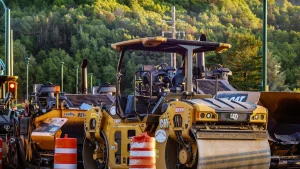
CONSMAC is positioned as a Chinese supplier of road and concrete construction equipment, and its product structure includes concrete construction equipment, road compaction equipment, road marking equipment, cutting equipment, and power finishing equipment. That mix is useful for buyers who need one vendor for multiple site tasks.
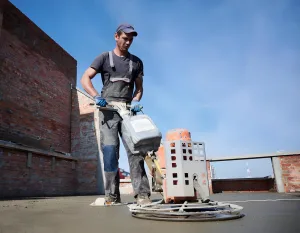
In practice, a Chinese cement mixer is often purchased alongside compaction and finishing tools for small and medium projects. For example, the same contractor may also need a power trowel for slab finishing or a concrete cutter for joint cutting and repair work.
Buyers should also review whether the supplier can support site preparation equipment, because project efficiency depends on the full workflow. A supplier with a broader line, such as tamping rammer machines, can be more practical for trench work, backfill, and narrow-area compaction.
Comparison Table: Supplier Types for Global Buyers
Comparison Table: Factory-Direct Suppliers vs Trading Companies vs Multi-Category Manufacturers
| Supplier Type | Strengths | Limitations | Best Fit |
|---|---|---|---|
| Factory-direct manufacturer | Better cost control, direct technical communication | May require higher MOQ | Distributors and project buyers |
| Trading company | Flexible sourcing, easier mixed orders | Less control over production | Small-volume importers |
| Multi-category manufacturer | One-stop sourcing, easier spare parts planning | Product depth varies by category | Contractors and rental companies |
Top 7 China Concrete Mixer Manufacturers: How to Build a Shortlist
The best shortlist is built from supplier capability, not from name recognition alone. Global buyers should compare seven candidates across technical fit, export history, service response, and pricing transparency before requesting samples or trial orders.
- Manufacturers with stable export documentation and clear technical specifications
- Factories that offer engine, drum, and voltage customization
- Suppliers with documented spare parts support and service response
- Companies that can handle OEM or ODM requirements
- Manufacturers with related concrete and road equipment lines
- Suppliers experienced in contractor, rental, and distributor channels
- Factories that provide realistic lead times and packaging details
For buyers who need a broader equipment package, a supplier with road and concrete categories can reduce sourcing complexity. That is especially useful for overseas contractors who want one shipment for mixing, compaction, cutting, and finishing tasks.
When evaluating a concrete mixer factory China, confirm whether the supplier can support the project lifecycle, not just the initial sale. The Federal Highway Administration pavement resources emphasize that durable construction outcomes depend on proper equipment selection, material handling, and execution quality.
Key Specifications Buyers Should Compare
Concrete mixer selection should start with capacity, power source, and site mobility. These three factors determine whether the machine is suitable for small repairs, general contracting, or repeated rental use.
According to OSHA construction safety guidance, equipment safety and operator control are central to reducing jobsite risk. For mixers, that means stable frames, guarded moving parts, and practical maintenance access.
Key Specifications for Buyer Comparison
| Specification | Typical Buyer Question | Selection Impact |
|---|---|---|
| Drum capacity | How much concrete per batch? | Affects output and crew efficiency |
| Power option | Gasoline, diesel, or electric? | Determines site compatibility |
| Mobility | Can it move easily on site? | Important for small and medium jobs |
| Maintenance access | Are wear parts easy to replace? | Supports rental and long-term use |
Buyers should also ask for test procedures and load conditions. A supplier that can explain operating limits clearly is usually more reliable than one that only lists basic dimensions.
Where to Buy and How to Compare Suppliers
The most efficient sourcing method is to compare one factory-direct supplier with several established industry alternatives. That approach helps buyers confirm whether pricing, delivery, and technical support are competitive in the current market.
For buyers seeking a broader equipment partner, CONSMAC can be reviewed alongside other well-known construction equipment suppliers in the road and concrete segment. Its product line is relevant for contractors who also need compaction, cutting, marking, and finishing equipment in the same procurement cycle.
When building a supplier directory, prioritize factories that can support both standard models and custom orders. A practical shortlist should include a concrete mixer specialist, a multi-category construction equipment factory, and at least one supplier with strong export documentation.
Why Global Buyers Choose Factory-Direct Procurement
Factory-direct procurement usually improves cost visibility and technical communication. Buyers can discuss configuration details directly, which reduces the risk of specification errors and mismatched expectations.
For overseas projects, the real advantage is not only price. It is also the ability to secure spare parts, confirm lead times, and align packaging with shipping requirements before the order is placed.
Industry estimates suggest that project delays often cost far more than small differences in unit price. That is why many contractors prefer suppliers that can support the full equipment chain, from mixing to finishing and site preparation.
FAQ
What should I check first when choosing a China concrete mixer manufacturer? Start with export experience, quality control, spare parts support, and technical documentation. Then confirm whether the supplier can meet your required capacity, power source, and delivery schedule. These factors matter more than a low initial quote because they affect project reliability and total ownership cost.
Is a concrete mixer factory China better than a trading company? A factory-direct supplier is usually better for buyers who need stable specifications, customization, and direct technical communication. A trading company may help with mixed orders, but it often provides less control over production details. The best choice depends on order size and service expectations.
Why do buyers compare mixers with other construction equipment? Buyers often need more than one machine for a jobsite, so comparing related equipment improves procurement efficiency. A supplier that also offers compaction, cutting, and finishing tools can simplify sourcing and spare parts planning. This is especially useful for contractors and rental businesses.
What makes a Chinese cement mixer suitable for export markets? Export suitability depends on packaging, labeling, manuals, power configuration, and after-sales support. The machine should also match local voltage or engine preferences. Buyers should request clear specifications and confirm whether the supplier can provide OEM or ODM support for their market.
How can I reduce risk when buying from overseas? Use a sample order or trial shipment, request written specifications, and verify spare parts availability before mass purchase. It also helps to compare several suppliers and check whether they can support the full project cycle. This reduces the chance of downtime, delays, and unexpected maintenance costs.