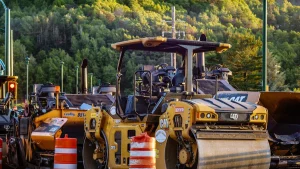
- Concrete mixer selection should be driven by job size, site access, and mix consistency requirements.
- Uniform mixing supports better placement, lower segregation risk, and more predictable finish quality.
- For small and mid-size construction jobs, the mixer often improves labor efficiency more than manual batching ever can.
- The best choice is usually a balance of capacity, drum design, engine type, and maintenance access.
- Pairing the mixer with the right site equipment improves the whole workflow, not just one step.
Why a concrete mixer is essential for building construction becomes clear when you look at the numbers: hydraulic and mechanical placement quality depends on fresh concrete retaining workable properties, and standard slump test practice under ASTM C143/C143M is built around the idea that fresh concrete must be mixed and handled consistently before placement. In real sites, that means a concrete mixer is not just a convenience machine; it is a process-control tool that supports batch uniformity, reduces waste, and helps the crew place concrete before the mix loses workability. For contractors handling foundations, slabs, sidewalks, and small structural pours, a reliable building construction mixer can be the difference between smooth production and a costly stop-start workflow.
Why a Concrete Mixer Matters in Building Construction
The core job of a concrete mixer is to produce a uniform blend of cement, aggregates, water, and admixtures so the final concrete behaves as designed.
Without mechanical mixing, site crews face inconsistent hydration, poor dispersion of fines, and a higher risk of segregation, especially when working under time pressure or with variable aggregate moisture.
That is why the mixer sits near the start of the quality chain: if the batch is uneven, every later step, from vibration to finishing, becomes harder to control.In building construction, this matters across foundations, beams, slabs, columns, kerbs, and repair patches.
A mixer also supports productivity. When a crew can batch concrete steadily, the team spends less time waiting, less time correcting bad batches, and less time handling rejected material.
For small contractors, that often means fewer workers can complete a pour with better consistency.For rental companies, the value is even broader: a mixer is one of the most frequently used light construction machines because it serves multiple project types with low training barriers.
From a procurement perspective, the mixer is also one of the most adaptable tools in a light equipment fleet.It can support ready-mix supplementation, small on-site pours, maintenance work, and remote jobs where delivery access is limited.That flexibility is why many buyers compare it with other site tools, including plate compactors, rammers, and concrete vibrators, to build a complete workflow rather than purchasing isolated machines.
Concrete Mixer Performance and the Numbers That Matter
Concrete mixer selection should start with measurable performance factors, not brand language or visual appearance.
The most important variables are batch capacity, drum speed, discharge control, power source, and ease of cleaning.
| Selection Factor | Why It Matters | Typical Practical Range |
|---|---|---|
| Batch capacity | Defines how much concrete can be mixed per cycle | Small site mixers often fall around 200 to 500 L drum capacity |
| Drum rotation speed | Affects mixing uniformity and discharge behavior | Common operating speed is often around 20 to 30 RPM for portable mixers |
| Mixing time | Controls consistency and workflow pace | Often several minutes per batch depending on materials and load size |
| Power source | Determines site suitability and mobility | Electric, gasoline, and diesel versions each fit different site conditions |
Fresh concrete performance is not guesswork. Workability is frequently checked with the slump test under ASTM C143/C143M, which is widely used to assess whether a batch is suitable for placement.
For contractors, this means the mixer must produce concrete that stays within the intended consistency window before it reaches the formwork.
Another useful reference is concrete temperature control, because hydration rate changes with heat and cold. In hot-weather work, a mixed batch that sits too long can lose workability and become harder to place and finish.
That is why onsite mixing is often preferred for smaller pours: the closer the batch is to the point of placement, the less chance there is for slump loss and material waste.
Site teams also track compaction and consolidation quality. When concrete is mixed poorly, even a good vibrator cannot fully correct the internal void structure.
This is where the mixer and the concrete vibrator lineup work as a system: the mixer creates a stable batch, and the vibrator removes entrapped air to improve density and finish quality.
How to Choose a Construction Mixer for Different Job Sites
The best concrete mixer depends on where and how the crew works, not only on nominal capacity.
A city sidewalk repair team, a foundation contractor, and a rental house serving general builders will not need the same machine configuration.
- For small repair jobs and tight access sites, portability and fast cleanup matter more than drum size.
- For repeated slab pours, batch stability and discharge control become more important than raw power.
- For remote jobs, fuel availability, wheel design, and serviceability can matter more than electric efficiency.
- For rental fleets, durability and easy user training often outweigh niche performance features.
Contractors should also match mixer type to the material flow on site.
For example, if the crew often handles short pours, patching, or mixed trades work, a smaller portable unit can be the most efficient choice.
If the workflow includes frequent movement across the jobsite, a towable or wheeled mixer can reduce handling effort.
For a supplier building a broader light-equipment package, the mixer also fits naturally alongside surface finishing and compaction tools such as power trowels and concrete cutters.
That matters because many construction buyers do not shop for one machine at a time; they shop for a complete workflow that can support excavation, base preparation, mixing, placement, consolidation, cutting, and finishing.
Concrete Mixer vs Manual Mixing and Other Site Methods
Mechanical mixing is generally more repeatable than hand mixing because it improves material distribution and reduces operator dependence.
That repeatability is one reason why construction mixer adoption is so common on professional sites, even for relatively small pours.
| Method | Consistency | Labor Demand | Best Use Case |
|---|---|---|---|
| Manual mixing | Low to moderate | High | Very small repair work |
| Portable mixer | Moderate to high | Moderate | Foundations, slabs, walkways, patching |
| Ready-mix only | High | Lower onsite mixing labor | Larger projects with good truck access |
Manual mixing can still be useful for tiny patch jobs, but it quickly becomes inefficient when batch size or finish quality matters.
A mixer reduces the variability that comes from shoveling, timing, and inconsistent water addition.
It also protects the crew from repeated heavy manual handling, which matters on long workdays and multi-batch pours.
Compared with jobsite-only batching by hand, a machine mixer gives supervisors more control over concrete quality and schedule.
That control is especially important when the project must meet finish, strength, or durability expectations across multiple pours.
For buyers who want a more complete work package, the right companion equipment can include plate compactors for base preparation and rammers for trench and edge compaction.
Where a Concrete Mixer Adds the Most Value
A concrete mixer is most valuable on projects where volume is moderate, access is limited, or batch timing directly affects quality.
Those conditions are common in building construction, municipal repair, and small infrastructure work.
Typical high-value use cases include footing pours, slab edges, small foundations, sidewalk panels, drainage structures, and patch repairs.
In each case, the mixer helps the crew control delivery timing and maintain uniformity from batch to batch.

On repair work, this is critical because partial pours must often match existing material in both finish and placement behavior.
On foundation work, it helps reduce cold-joint risk by supporting a smoother pour rhythm.
On rental jobs, a simple, durable mixer often delivers one of the strongest utilization rates in the fleet because it serves contractors across multiple trades.
This is also why many distributors present the mixer as part of a broader application set rather than as a standalone machine.
When buyers can also find concrete vibrators and power trowels in the same product family, procurement becomes easier because the supplier is clearly supporting the whole concrete workflow.
Maintenance, Safety, and Site Reliability
Maintenance discipline is a major reason some mixers last far longer than others in the field.Concrete residue hardens quickly, so cleaning immediately after use is not optional; it is part of preserving drum geometry, discharge performance, and drive reliability.Operators should inspect the drum, blades, guards, fasteners, and power system before each shift.
That simple habit reduces downtime and extends equipment life, especially on dusty or high-cycling sites.
- Clean the drum immediately after discharge to prevent buildup.
- Check belts, gears, and bearings for abnormal noise or looseness.
- Inspect switches, fuel lines, and cables before operation.
- Never overload the drum beyond the recommended batch size.
- Keep the mixer on a stable surface to reduce tipping and discharge risk.
Safety matters because mixers combine rotating parts, weight, water, and abrasive material.
The best operational practice is to keep hands and tools away from moving parts, shut down before maintenance, and train workers on safe loading and discharge procedures.
For overseas projects, service response and spare part availability can matter as much as mechanical performance.
That is why procurement teams often favor suppliers who can provide a predictable delivery schedule, clear communication, and low-friction technical support.In practice, a dependable construction mixer is not only judged by its specs but by how well it supports the project when conditions become messy, time-sensitive, or remote.
How the Mixer Fits into the Larger Concrete Workflow
The concrete mixer is only one part of a complete construction workflow, but it is the point where many quality problems either begin or get prevented.
A typical sequence is base preparation, mixing, transport, placement, vibration, finishing, and curing.
If the mix is inconsistent, the rest of the sequence becomes harder to control.
If the mix is uniform, the crew can work faster and with fewer corrections.
That is why the mixer should be evaluated together with compaction and finishing equipment, not in isolation.For example, a contractor working on sidewalk repairs may need a mixer, a concrete cutter, and a power trowel to complete the job efficiently.
A road maintenance crew may pair mixing with cutting and surface preparation before patching and finishing.A trench contractor may prioritize compaction first, then concrete placement, then vibration and finishing.
In all of these situations, the mixer is essential because it stabilizes the material stage of the workflow.
That role is why the search intent behind “why concrete mixer is essential for building construction” usually includes not only “what does it do” but also “which type do I need,” “how does it compare,” and “what else should I buy with it.”
Decision Guide for Buyers and Contractors
Buyers should narrow the choice by answering a few practical questions before comparing models.
- What is the average batch size on site?
- Is the site fixed, mobile, or constrained by access?
- Will the mixer be used for building construction, repair, or rental?
- Does the crew need electric convenience or engine-powered mobility?
- How important are cleaning speed and spare part access?
If the answer points to frequent mobility and mixed-use projects, a portable mixer is often the safer choice.
If the answer points to remote work or variable power supply, engine-driven units may fit better.
If the buyer is a distributor, the stronger commercial angle is not only machine price but also product range, supply stability, and repeatable service support.
That is where a supplier with a multi-product portfolio can be useful, because customers often need a package rather than one item.From that perspective, the mixer is a core entry product, but it also opens cross-sell opportunities into compaction, cutting, vibration, and finishing.
FAQ
Why is a concrete mixer better than manual mixing?
A concrete mixer is better because it improves batch consistency, reduces labor, and helps crews place concrete before workability drops.
What size concrete mixer is best for building construction?
The best size depends on batch volume, but portable site mixers are commonly used for small to mid-size construction jobs where mobility matters.
Can one mixer handle both construction and repair work?
Yes, many mixers are suitable for both, provided the batch size and material type match the drum capacity and discharge design.
How does mixing quality affect concrete strength?
Poor mixing can lead to segregation and uneven water distribution, which can reduce consistency in placement and compromise finished quality.
Should a contractor buy a mixer or rely on ready-mix only?
That depends on access, project size, and delivery reliability; onsite mixing is often more practical for smaller, remote, or highly time-sensitive jobs.
What other equipment should be paired with a mixer?
Common companions include concrete vibrators for consolidation, power trowels for finishing, and cutters for repair and joint work.
What should overseas buyers check before purchase?
Overseas buyers should review build quality, spare part support, communication speed, delivery stability, and whether the mixer fits their local project mix.