
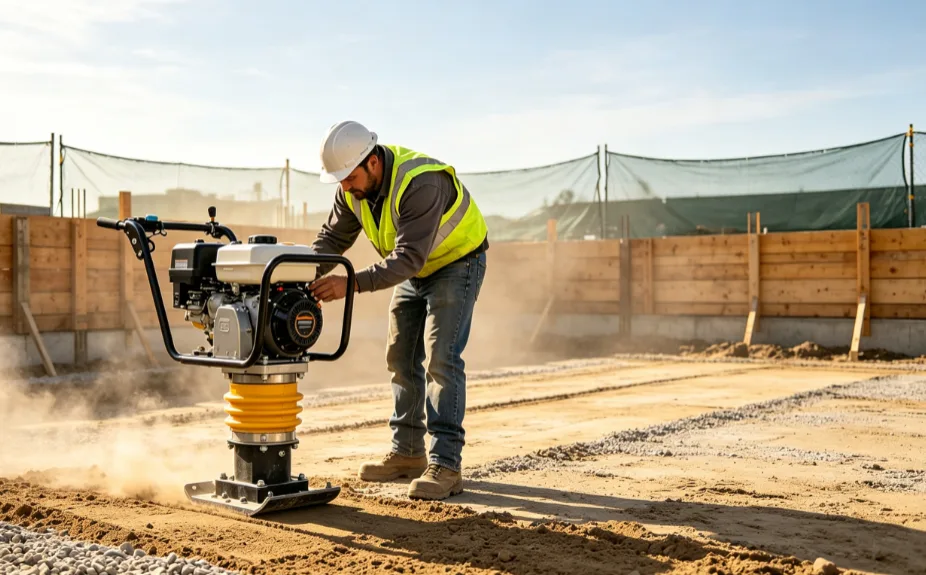
- Tamping rammers are designed for cohesive and mixed soils in confined spaces where plate compactors lose effectiveness.
- Deep soil compaction is usually a layered process: place, moisture-condition, compact, and verify density.
- Real jobsite performance depends on lift thickness, trench width, soil classification, and operator control.
- Verification matters: field density and moisture testing matter more than visual appearance alone.
Tamping rammer machines are essential for deep soil compaction because the physics of impact compaction favors concentrated energy over broad surface vibration, especially in trench work, utility backfill, and edge zones where the compaction footprint is limited. In practice, compactors are often selected to achieve target field density near a specification such as 95 percent of maximum dry density, commonly verified through ASTM D1557 laboratory methods and field checks under ASTM D1557 and related field standards. For contractors building roads, sidewalks, and foundation lines, the difference between a stable base and a settlement-prone one is often the choice between a plate machine and a tamping rammer used in the right layer sequence.
Why deep soil compaction needs impact, not just vibration
Deep soil compaction works best when energy is delivered downward in repeated blows that drive particles into a tighter arrangement.
This is especially important in granular-cohesive mixed backfill, clayey trench spoil, and utility zones that are too narrow for large rollers or plate compactors to build uniform density.
Unlike surface vibration, a tamper’s shoe concentrates force into a smaller contact area, which helps break internal arching and squeeze out voids in deeper lifts.
That is why a deep soil rammer is often chosen for utility trenches, footing edges, and compacting around pipe haunches, where full-width equipment cannot reach.
For moisture-sensitive soils, the compaction mechanism matters even more. If the soil is too dry, particles resist rearrangement; if it is too wet, the soil can pump, rebound, or lose shear strength. Contractors often use laboratory Proctor testing to establish the optimum moisture content before field work begins, because compaction effectiveness is controlled by the moisture-density relationship, not by machine force alone. The result is simple: a tamping rammer becomes essential when the job requires depth, concentration, and access in the same tool.
Tamping rammer vs plate compactor: the practical selection rule
The easiest rule is that plate compactors win on area coverage, while tamping rammers win on depth and access.
| Tool | Best use case | Typical working context | Strength | Limitation |
|---|---|---|---|---|
| Tamping rammer | Trenches, footings, narrow backfill | Confined space, edge zones | High impact energy in small footprint | Slower on large open areas |
| Plate compactor | Road base, patios, parking lots | Broader surfaces | Fast coverage on granular base | Less effective in tight trenches |
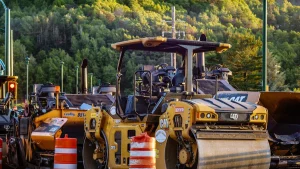
| Roller | Large embankments and road subgrade | Open-access earthwork | High productivity over wide lanes | Cannot enter narrow utility cuts |
In a typical jobsite sequence, a contractor may use a plate compacting machine for open subbase areas and then switch to a tamper for edge compaction, wall backfill, and pipe trenches. This workflow is efficient because it matches the compaction mechanism to the geometry of the work area. The practical decision is not which machine is “better,” but which machine can actually deliver density in the target zone. For buyers comparing plate compactor options with a deep soil rammer, the real question is whether the soil is open enough for vibration to travel or confined enough to require impact.
How deep soil rammer machines improve trench backfill quality
Deep soil rammer machines improve trench backfill quality by reducing voids in successive thin layers rather than trying to compress an entire trench at once.
That matters because trench settlement usually starts in the backfill zone, not at the surface, and the failure may appear months later as cracking, rutting, or utility line movement.
For pipe installation, compacting around the haunch and springline is critical because those zones carry load transfer from the surrounding soil.
When compacted poorly, the backfill can bridge near the top while remaining loose below, creating hidden settlement potential.
Compaction testing standards help remove guesswork. For example, ASTM D6938 describes the nuclear method for in-place density and moisture, while ASTM compaction curves establish target moisture-density relationships before field acceptance. A common field target in infrastructure work is 95 percent compaction, although project specifications may require more or less depending on the application. The exact percentage is less important than consistency across lift thickness, moisture, and coverage. A tamping rammer supports that consistency by applying repeated impact in tight spaces where other machines lose energy transfer.
Soil types, lift thickness, and when a tamping rammer is the right answer
The right compaction tool depends on both soil classification and the lift thickness being compacted.
| Soil condition | Typical suitability | Reason | Field caution |
|---|---|---|---|
| Sandy gravel | Plate compactor or rammer | Vibration and impact both work well | Control moisture to prevent segregation |
| Silty sand | Rammer preferred in confined areas | Needs energy to reduce voids | Avoid overly thick lifts |
| Clayey fill | Rammer often preferred | Impact helps where vibration alone is weak | Moisture window is critical |
| Rocky trench backfill | Use caution | Oversize particles may reduce uniformity | Remove large debris before compaction |
As a practical rule, thinner lifts compact more reliably than thick ones. Many field crews aim for lifts that the machine can consolidate uniformly rather than relying on a single pass to do the job. The machine’s rated jump stroke, impact frequency, and shoe size all matter, but none of those specifications can overcome poor lift discipline. That is why deep soil compaction is as much a process issue as a machine issue.
For reference, compaction quality is often validated through the Standard Proctor method, ASTM D698, for lower-energy compaction scenarios and ASTM D1557 for higher-energy requirements. These standards do not tell the operator which brand to buy, but they do define the density targets that the field work must achieve. A tamper is valuable because it gives crews a better chance of reaching those targets in awkward, narrow, or deep locations.
What performance data should buyers look for in a tamping rammer
Buyers should focus on impact force, stroke, engine power, operating weight, shoe size, and service access rather than on marketing language.
A useful machine is one that can compact the intended soil in the intended space without forcing the operator to make repeated corrective passes.
For gasoline-powered models, common professional machines in this class often use engines around 3 to 4 horsepower, but actual selection should be based on the specific machine configuration and task, not engine size alone.
For diesel or alternative power setups, site fuel policy and ventilation conditions may drive the decision more than power output.
| Selection factor | Why it matters | What to check | Example field impact |
|---|---|---|---|
| Impact frequency | Controls compaction rhythm | Machine specification sheet | Higher frequency can improve workflow consistency |
| Shoe size | Affects footprint and trench access | Width and length | Smaller shoes fit tighter trenches |
| Operating weight | Influences contact pressure | Net machine mass | Heavier units may compact more effectively but are harder to transport |
| Engine type | Matches site fuel and ventilation | Gasoline or diesel | Useful for mixed fleets and remote jobsites |
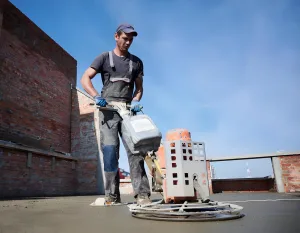
If the job requires frequent relocation, lightweight design becomes a productivity factor because moving the machine manually between trench sections can consume more time than the compaction cycle itself. That is one reason construction teams value compact equipment that is easy to load, unload, and maintain. For contractors comparing equipment categories, it can also help to review the broader road construction equipment lineup alongside the tamping rammer and related power trowel tools, because many projects move from subgrade to finish work in one continuous sequence.
How to use a tamping rammer correctly in deep soil work
Correct operating method is what turns machine capability into real compaction quality.
- Prepare the trench or fill area by removing oversized debris and leveling the layer.
- Adjust moisture near the project’s optimum range before compaction begins.
- Compact in thin lifts, not in a single deep placement.
- Overlap passes so the shoe footprint fully covers the target zone.
- Watch for pumping, rebound, or surface “spring,” which can signal over-wet soil.
- Verify density using the project’s accepted field test method.
The best operators do not judge success by how hard the ground looks from above.
They judge it by whether the backfill densifies uniformly through the full lift thickness and whether the trench remains stable after traffic load or weather cycles.
In real jobs, this process discipline prevents callback work, utility settlement, and premature surface repair. That is why the tamping rammer is not simply a small machine; it is a control tool for hidden-risk zones.
Where deep soil compaction creates the highest return
Deep soil compaction creates the highest return in places where failure is expensive, disruptive, or hard to access later.
Typical examples include sewer and water trenches, electrical duct banks, curb and sidewalk edges, foundation perimeters, manhole surrounds, and road cut repairs.
These are areas where settlement can translate quickly into surface defects, water ingress, trip hazards, or asset damage.
Contractors often prefer a rammer in these locations because the machine improves quality without requiring the excavation to be widened just to fit larger equipment.
That access advantage has a direct economic effect: less over-excavation, less rework, and lower labor time for confined locations. Industry cost outcomes vary by region and project type, but compaction rework is consistently more expensive than doing the layer correctly the first time. In that sense, the tamping rammer pays for itself by reducing hidden risk rather than by increasing visible output.
Common mistakes that reduce compaction depth and quality
The most common compaction mistake is using the right machine in the wrong conditions.
- Compacting too thick a lift at one time.
- Working with soil that is far outside the optimum moisture window.
- Using a plate machine in a trench that is too narrow for energy transfer.
- Ignoring edge zones near walls, pipes, and footing lines.
- Skipping field density verification because the surface looks firm.
Another common issue is selecting a machine based only on speed. Speed matters, but density matters more. A quick pass that leaves hidden voids is more expensive than a slower pass that meets the specification the first time. This is why deep soil work is a process of controlled repetition, not brute force.
How CONSMAC-style equipment coverage supports the full compaction workflow
A complete compaction workflow usually needs more than one machine category.
For open areas, a plate compactor can handle base prep efficiently; for trenches and edges, a tamping rammer is the better choice; for post-compaction finishing, a power trowel or floor grinder may support the later surface stages depending on the project type.
This matters because contractors do not buy a tool in isolation; they buy the ability to move from preparation to compaction to finishing without leaving gaps in workflow.
That is where a focused construction-equipment lineup becomes valuable, especially for roadwork, concrete slabs, maintenance crews, and export buyers that need practical, jobsite-ready machines rather than oversized general-purpose assets.
For teams that work across pavement repair, site prep, and concrete finishing, the broader category pages such as concrete cutting machine and concrete mixer show how compaction fits into the larger production chain, from material placement to surface completion. A tamping rammer is essential because it closes the critical gap between loose fill and reliable support.
FAQ
What is a tamping rammer used for?
A tamping rammer is used for compacting soil in narrow or confined areas such as trenches, backfill zones, footing edges, and utility cuts.
Why is a deep soil rammer better than a plate compactor in trenches?
A deep soil rammer is better in trenches because its concentrated impact can reach and densify soil in spaces where a plate compactor cannot transfer energy effectively.
How thick should each compaction lift be?
The correct lift thickness depends on soil type, moisture, and project specification, but thinner lifts compact more reliably than deep single placements.
What density target is commonly used in construction?
A common target is 95 percent compaction, though final acceptance depends on the project specification and the soil test method used.
Which standards are used to verify compaction?
Common standards include ASTM D698 for Standard Proctor, ASTM D1557 for Modified Proctor, and ASTM D6938 for in-place density and moisture testing.
When should I use a tamping rammer instead of a plate compactor?
Use a tamping rammer when the area is narrow, deep, or highly confined, especially in trench backfill and edge compaction where vibration coverage is limited.
What causes poor deep soil compaction even with the right machine?
Poor moisture control, oversized lift thickness, inadequate overlap, and lack of field testing are the most common causes of poor compaction results.