
- Tamping rammers are designed for narrow trenches where compaction plates cannot reach.
- Pipeline construction depends on lift-by-lift backfill compaction to reduce settlement and surface failure.
- Moisture, lift thickness, and trench geometry matter as much as machine choice.
- Compaction targets are commonly measured against standards such as ASTM D698, ASTM D1557, and ASTM D6938.
In pipeline construction, the tamping rammer, often called a pipe trench rammer, solves one of the most expensive hidden problems in trench work: inadequate backfill compaction. A trench that looks acceptable on day one can later settle, crack pavement, or expose the pipe if the soil was not compacted correctly. That is why trench backfill is usually compacted in thin lifts, often around 100 to 150 mm depending on soil and specification, and verified against standards such as ASTM D698, ASTM D1557, and field density methods such as ASTM D6938. In real pipeline jobs, a compact rammer is not just a convenience; it is a risk-control tool for settlement prevention, trench stability, and long-term pavement performance.
Why a Tamping Rammer Matters in Pipeline Construction
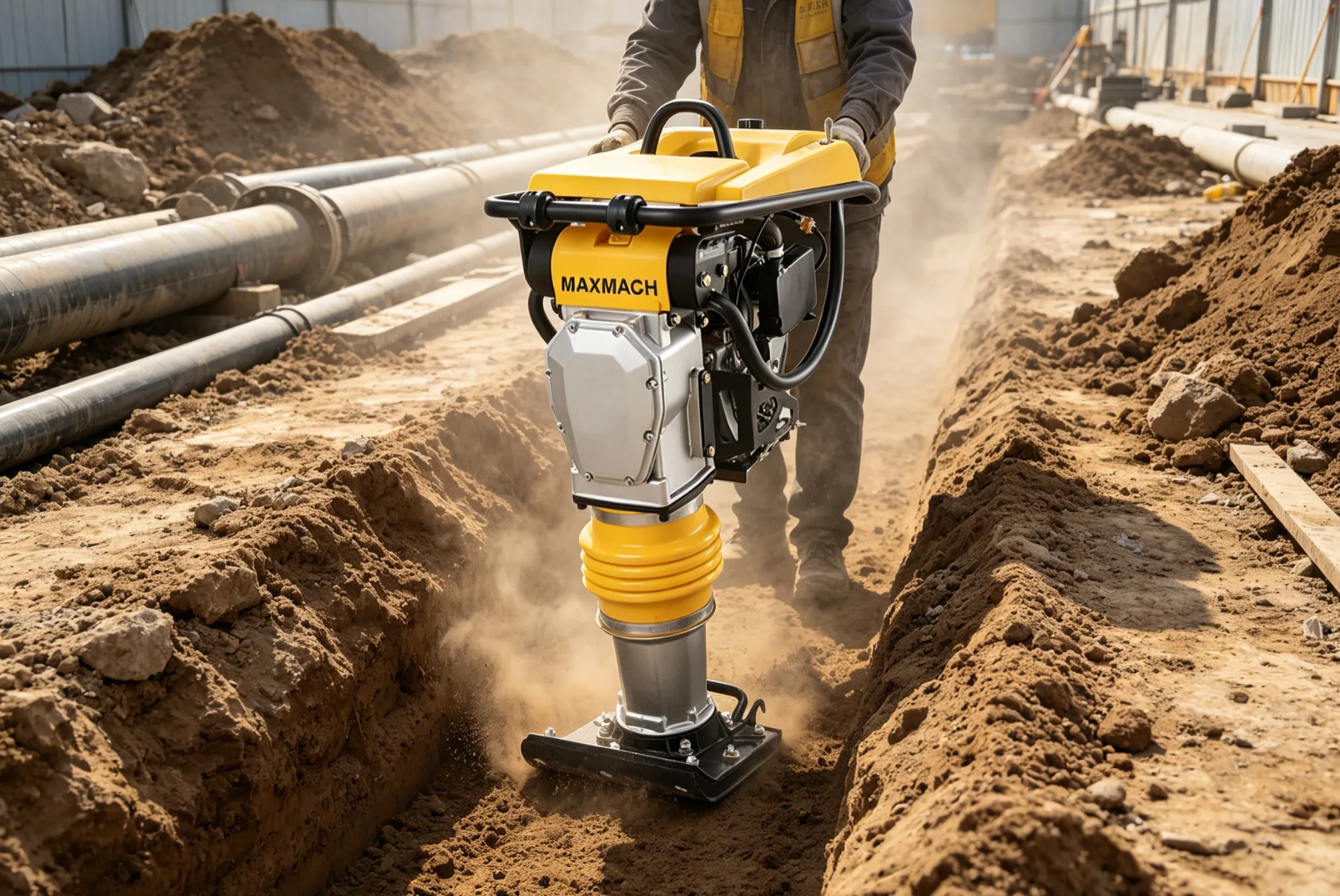
The main reason a tamping rammer is used in pipeline construction is geometry. A trench is narrow, deep, and full of obstacles, so compaction equipment must work vertically and reach tight edges. A pipe trench rammer delivers focused impact force in a footprint small enough to compact beside pipe walls, around haunches, and in utility corridors. Plate compactors can be useful for broader areas, but in a trench their working width and vibration pattern can leave voids close to the pipe. A rammer’s shoe concentrates energy into the soil, which is why it is preferred for cohesive soils, mixed backfill, and edge compaction in confined spaces.
There is also a structural reason to use a tamping rammer. Pipeline failures are often indirect failures caused by poor trench backfill. When soil density varies, the load from traffic or a slab above the trench is transferred unevenly, which can lead to rutting, depressions, and surface cracks. In utility restoration work, that is especially costly because the final repair is only as durable as the compaction below it. For contractors who also handle roadwork, a site often needs multiple machines in sequence, such as a cutter, a rammer, and a plate compactor. A supplier with a full road and pavement equipment range, such as rammers, plate compactors, and concrete cutting machines, can cover the trench-to-surface workflow with fewer handoffs.
How Pipe Trench Compaction Works After the Pipe Is Set
Pipe trench compaction starts after the pipe is installed, aligned, and protected with the specified bedding and initial backfill. The objective is not to force soil aggressively against a fragile line, but to build stable support around it in controlled layers. That is why operators compact in stages rather than filling the trench all at once. Around the pipe haunches, compaction quality is especially important because this zone carries much of the pipe load distribution. If the haunches are weak, the pipe can deflect under traffic or overburden loads.
Good trench practice usually follows four steps: place bedding, set and inspect the pipe, add initial backfill around the pipe zone, and compact in thin lifts before final backfill. A tamping rammer is most effective in the later stages of this sequence, especially in narrow or cohesive soil conditions where a vibrating plate may bridge over the surface. In mixed soil conditions, the contractor must also monitor moisture, because soil that is too dry will not knit together and soil that is too wet will pump and lose density. That is why compaction work often relies on field density checks and moisture content verification rather than machine effort alone.
| Trench Factor | Typical Field Concern | Why the Tamping Rammer Helps |
|---|---|---|
| Trench width | Limited access near pipe walls | Small shoe fits confined spaces |
| Pipe zone | Void risk near haunches | Concentrated impact reaches edges |
| Backfill lift | Loose layers settle later | High-impact force improves density |
| Surface restoration | Future pavement rutting | Reduces post-repair settlement |
Tamping Rammer vs Plate Compactor in Pipeline Construction
The best compaction tool depends on the trench condition, but a tamping rammer usually wins in narrow utility trenches. A plate compactor is stronger for wider, flatter areas and granular subbase work, while a pipe trench rammer is better for vertical energy delivery in a restricted footprint. Contractors often use both: the rammer for the pipe zone and the plate for the upper backfill or surface layer. This division of labor is common because each machine creates a different compaction effect.
| Machine Type | Best Use Area | Typical Working Character | Common Limitation |
|---|---|---|---|
| Tamping rammer | Trench walls, haunches, confined backfill | Vertical impact compaction | Slower on large open areas |
| Plate compactor | Road base, wider backfill, surface layers | Vibratory surface compaction | Harder to use near pipe edges |
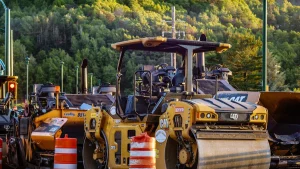
| Roller | Open subgrade and roadway sections | Large-area rolling compaction | Not suitable for narrow trenches |
The selection rule is simple: use the tamping rammer where access is tight and density must be built from the bottom up, then switch to a plate compactor when the trench opens up enough to support broader surface coverage. This is one reason many contractors keep both tamping rammers and plate compactors on the same truck.
Technical Factors That Determine Compaction Quality
Compaction success depends on machine energy, soil type, moisture, lift thickness, and operator technique. The tamping rammer itself matters, but it cannot compensate for bad material or poor sequencing. A rammer with a well-maintained shoe, consistent impact rate, and correct engine output will perform more predictably than a worn unit with unstable throttle response. In the field, contractors also care about practical machine numbers such as engine size, operating weight, and impact frequency, because these influence how the machine behaves in a trench.
| Technical Factor | Typical Range or Reference | Why It Matters |
|---|---|---|
| Lift thickness | 100 to 150 mm per lift | Thinner lifts compact more uniformly |
| Field density target | Commonly 95% to 100% of Proctor target | Reduces settlement risk |
| Moisture control | Near optimum moisture content | Improves particle rearrangement |
| Impact frequency | Often around 600 to 700 blows per minute in compact rammers | Higher repetitive force helps dense trench work |
For soil testing and acceptance, contractors frequently rely on Proctor-based compaction methods. ASTM D698 covers standard effort, while ASTM D1557 covers modified effort. Field verification often uses nuclear or nonnuclear methods under ASTM D6938. The numbers matter because a trench that passes visual inspection but fails density targets can later become a maintenance liability. In pipeline construction, that failure can appear as joint movement, pavement cracking, or soft spots along the restored corridor.
When Contractors Choose a Tamping Rammer for Pipe Trench Work
Contractors choose a tamping rammer when access is limited, the soil is cohesive or mixed, and the risk of settlement is high. The machine is especially useful in urban utility work, service line installation, sewer and water main trenching, and road reinstatement after pipe repairs. It is also common on projects where the trench runs close to walls, curbs, foundations, or existing utilities, because those edges are difficult to compact with larger equipment.
Experience on real jobs shows that the rammer becomes most valuable at the transition zone between the pipe and the surrounding trench. That zone is where loose soil tends to remain if operators rely only on shovels or surface vibration. A compact rammer can also help crews work in wet or slightly plastic soils where a plate may simply ride over the top. For road crews, the benefit is practical: fewer callbacks, less surface settlement, and a better chance that the restored lane will stay stable through seasonal traffic and rainfall cycles.
- Use a tamper in narrow trenches where the pipe zone needs edge compaction.
- Switch to a plate compactor when the trench widens enough for surface coverage.
- Check moisture before every lift, especially in clay-rich backfill.
- Confirm density with field testing instead of relying on machine feel alone.
Pipeline Construction Risks That a Pipe Trench Rammer Helps Reduce
A pipe trench rammer reduces several common trench-restoration risks, especially settlement, void formation, and differential loading. Settlement is the most visible failure mode, but it is often preceded by hidden under-compaction. When soil compacts unevenly, traffic loads concentrate on the weak sections and accelerate surface failure. In roadway crossings, that can show up within months as a depression line over the trench. In landscaped or off-road pipeline corridors, it may appear as sinking soil and drainage problems.
Another important risk is pipe damage from uncontrolled compaction. Excessive compaction force too close to the pipe can deform sensitive lines or disturb bedding. That is why trained operators compact in controlled stages and avoid aggressive action directly on the pipe before adequate cover is in place. Good practice is not simply “more force”; it is the right force at the right depth with the right moisture level. The tamping rammer supports that method because it allows targeted compaction rather than blanket vibration across the whole trench.
How to Choose the Right Tamping Rammer for Pipeline Construction
The right tamping rammer for pipeline construction is the one that balances access, impact force, weight, and operator control. Contractors usually evaluate whether the machine can fit into the trench, whether it has enough energy for cohesive backfill, and whether it is easy to move between repair points. In road and utility maintenance work, portability often matters as much as power because the crew may have to compact several short sections in one shift.
| Selection Criterion | What to Look For | Pipeline Work Impact |
|---|---|---|
| Shoe width | Narrow enough for trench access | Improves edge reach |
| Operating weight | Enough mass for stable impact | Helps density in cohesive soils |
| Engine type | Gasoline or diesel depending on site | Matches fuel logistics |
| Handling design | Balanced frame and ergonomic control | Reduces fatigue in repeated lifts |
For buyers comparing equipment across brands or distributors, it helps to look beyond the machine photo and ask practical questions: Can it work in a 300 to 450 mm trench? Is maintenance simple for a field crew? Does the supplier provide parts and service support? For contractors who also need mixers, cutters, and surface finishing tools, a broader equipment source such as concrete mixers and road marking machines can be useful when pipeline restoration is part of a larger municipal or roadway job package.
Field Procedure for Better Pipe Trench Compaction
Better trench compaction comes from process discipline, not from a single machine upgrade. The most reliable workflow is to inspect the trench, verify bedding, place backfill in measured lifts, compact each lift, and test before continuing. If the material is too wet, the crew should correct moisture rather than simply increasing machine passes. If the trench is too narrow for proper action, the compaction method should change rather than forcing an inappropriate tool into the space.
- Confirm pipe bedding and initial backfill placement.
- Place backfill in thin, uniform lifts.
- Compact with a tamping rammer in the pipe zone and edges.
- Test density at representative points.
- Switch to a plate compactor for wider upper layers if needed.
This sequence is especially important in road-crossing trenches, where poor compaction quickly becomes visible to traffic. Pipeline construction is expensive enough without repeat repairs, and the compaction stage is one of the few places where small operational changes can prevent major future costs. In that sense, the tamping rammer is not just a trench tool; it is a quality-control tool for the whole restoration chain.
Frequently Asked Questions About Tamping Rammer Use in Pipeline Construction
What is the main purpose of a tamping rammer in pipeline construction?
The main purpose is to compact trench backfill in confined spaces so the pipe corridor remains stable and settlement is minimized.
Why is a pipe trench rammer better than a plate compactor in narrow trenches?
A pipe trench rammer is better because its narrow shoe and vertical impact can reach the haunches and trench edges more effectively than a plate compactor.
How thick should each backfill lift be in trench compaction?
In many trench applications, lifts are compacted in roughly 100 to 150 mm layers, depending on soil and specification.
Can a tamping rammer damage the pipe?
It can if used too aggressively before proper cover and bedding are in place, which is why staged compaction and trained operation are essential.
What soil types are best for a tamping rammer?
It is especially effective in cohesive and mixed soils where vertical impact helps bind particles and close voids.
When should a contractor switch from a rammer to a plate compactor?
The switch usually happens when the trench opens enough for wider surface coverage and the work moves from edge compaction to upper-layer finishing.