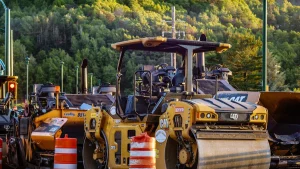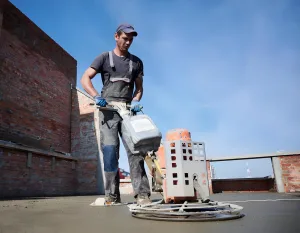

- Tamping rammers are designed for narrow zones, cohesive soils, and trench edges where static or vibratory rollers lose effectiveness.
- Road foundation quality depends on density control, moisture conditioning, and lift-by-lift compaction, not just machine power.
- Choosing between a tamping rammer and a plate compactor depends on soil type, working width, and access constraints.
- In road repair workflows, tamping rammers often complement road cutting machines, concrete mixers, and road marking machines.
- Reliable foundation compaction is a risk-control step that reduces settlement, patch failure, and rework in municipal and commercial projects.
Tamping rammer machines are used in road foundation construction because compaction quality directly affects pavement performance, and subgrade problems almost always start beneath the surface. In roadworks, compaction is not a cosmetic step; it is a structural one. Standards such as ASTM D698 and ASTM D1557 define how maximum dry density and optimum moisture are determined in the laboratory before field compaction is checked. For projects with narrow working envelopes, a tamping rammer is often the only machine that can achieve consistent energy transfer at trench bottoms, shoulder edges, and around embedded utilities. For broader workflow planning, teams commonly pair it with a concrete mixer for material preparation and a plate compactor for wider base areas.
Why tamping rammer machines matter in road foundation construction
The main reason tamping rammer machines are used in road foundation construction is that road failure often begins with uneven compaction, not with the asphalt or concrete surface. When foundation layers settle, the surface above them flexes, cracks, and opens joints that admit water. That water accelerates weakening, especially in repeated wet-dry and traffic-loading cycles. A tamping rammer solves this by applying concentrated impact force in short strokes, which is particularly effective in confined spaces where a heavy roller cannot transmit pressure uniformly. In practical terms, the machine is a problem solver for the parts of a road that are hardest to compact correctly the first time.
Road foundation work also has a geometry problem. Open areas such as parking lots and roadway shoulders can be compacted with wider tools, but trench backfill, utility corridors, and edge transitions leave “dead zones” that are easy to undercompact. Undercompaction at these points can create differential settlement, which is one of the most common causes of patch failure after road repairs. That is why contractors often keep both a rammer compactor and a plate compactor on the same site: the machine choice follows the working space, not the other way around.
How tamping rammer compaction works on road base layers
A tamping rammer compacts soil through repeated vertical impact rather than a broad vibrating footprint. The shoe lifts and strikes the surface in rapid cycles, creating high localized pressure that rearranges particles and drives out voids. This makes the machine especially suitable for cohesive or mixed soils that hold together under impact better than under pure vibration. In road base work, the result is a denser, more stable lift with fewer weak seams between layers.
The engineering goal is not maximum force in isolation; it is achieving the target field density at the correct moisture content. Both ASTM D698 and ASTM D1557 are used to establish the compaction reference curve, and many public works specifications require the field layer to meet a percentage of the laboratory maximum dry density. That makes the tamping rammer part of a measured process rather than a guesswork tool. If a lift is too thick, too dry, or too wet, no machine can compensate fully, which is why foundation compaction starts with material conditioning, not machine selection alone.
| Compaction method | Best use case | Typical working zone | Main advantage |
|---|---|---|---|
| Tamping rammer | Trenches, edges, utility backfill | Narrow and confined | High impact energy in restricted spaces |
| Plate compactor | Road base, parking areas, wider subgrades | Open and medium-width | Fast coverage on granular surfaces |
| Roller | Main roadway stretches and large pads | Wide open surfaces | High productivity over long runs |
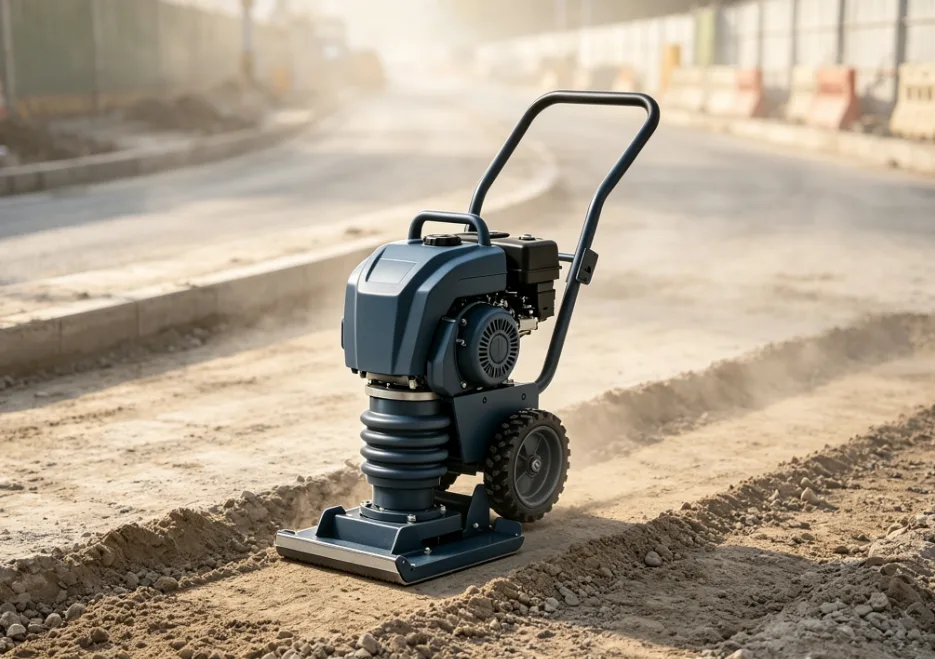
Road foundation layers where a road base rammer is most effective
A road base rammer is most effective where layer continuity and access are both difficult. These are the locations where inspectors often find hidden defects after rainfall or traffic loading. Trench backfill around drainage pipes is a classic example, because the material is placed in thin lifts but the working area is too narrow for broad compaction equipment. The same challenge appears at curb returns, manhole rings, sidewalk edges, and patch transitions after utility cuts. In all of these cases, the tamping rammer is used because it can reach the zone that matters structurally.
The machine is also valuable in foundation transitions. Roads often change from full-width open sections to narrow tie-in points near intersections, drainage inlets, or driveway approaches. Without a rammer, those transition points can remain softer than the surrounding base layer. This creates stress concentration once traffic starts moving over the area. A compacted transition zone reduces that risk and improves the durability of the whole section.
| Foundation zone | Why compaction is difficult | Preferred equipment | Risk if undercompacted |
|---|---|---|---|
| Utility trench backfill | Narrow width and variable lift thickness | Tamping rammer | Settlement and surface depressions |
| Edge and shoulder zones | Limited access near forms or curb lines | Tamping rammer or small plate compactor | Edge cracking and raveling |
| Road patch tie-ins | Transition between old and new layers | Tamping rammer | Patch failure and water ingress |
Technical factors that influence road foundation compaction quality
Compaction quality depends on more than machine type, because soil behavior changes with moisture, grain structure, and lift thickness. Cohesive soils need controlled impact to rearrange particles, while granular materials often respond better to vibration and repeated surface coverage. For road foundation construction, this means the tamping rammer is strongest where the material is not purely free-draining sand and where the jobsite is constrained. The operator must also maintain a consistent lift thickness so the energy reaches the full depth of the placed layer.
Machine specification matters as well. Compact rammers in the market commonly use engines in the 3 to 5 kW class, depending on model and fuel type, and the shoe impact frequency is often around 600 to 700 blows per minute, according to manufacturer specifications. Those numbers matter because they shape productivity, jump height, and soil response. For contractors, the practical question is not whether the machine is “powerful,” but whether its impact profile fits the foundation material and site access.
| Selection factor | Why it matters | Field implication |
|---|---|---|
| Lift thickness | Energy must penetrate the full layer | Thick lifts are harder to densify evenly |
| Moisture content | Soil compacts best near optimum moisture | Too dry or too wet reduces achievable density |
| Access width | Equipment must fit the work zone | Narrow spaces require a tamping rammer |
| Soil type | Cohesive and mixed soils respond differently | Machine choice should follow material behavior |
What standards and test methods tell contractors about road base compaction
Compaction work becomes more reliable when it is tied to standard testing instead of visual judgment. ASTM D698 is the Standard Proctor test, while ASTM D1557 is the Modified Proctor test, which uses higher compaction effort to represent more demanding field conditions. These tests establish the maximum dry density and optimum moisture content that field crews use as a target. In road foundation construction, that target is what separates a temporary fill from a layer intended to carry traffic loads over time.
For compaction verification, field teams may use density gauges, sand cone tests, or other approved methods, depending on the project specification. The key is traceability: if the road base rammer is doing its job but the layer is placed too thick or too dry, the test will reveal the mismatch. This is why disciplined crews treat compaction as a controlled process. The machine is essential, but the measurement system is what proves the result.
International buyers and project managers also look at broader machinery safety and conformity expectations. In Europe, many construction machines are designed around the safety framework in Directive 2006/42/EC, which addresses machinery safety requirements. That matters for equipment selection because road maintenance and public works contractors increasingly ask for machines that are easier to operate, safer to control, and simpler to maintain on distributed job sites.
When a tamping rammer is better than a plate compactor
A tamping rammer is better than a plate compactor when the job has depth, not width. Plate compactors excel on wider, flatter granular areas because their base footprint covers more surface per pass. A tamper, however, concentrates energy into a smaller contact area and can reach harder-to-access zones more effectively. In real road foundation work, this difference is decisive at trench ends, around pipe sleeves, and along structures where a plate cannot fit.
Contractors often make the wrong choice by asking which machine is “stronger.” The better question is which machine can deliver the right compaction mechanism to the right zone. For a utility backfill line, the issue is not surface coverage but vertical densification in a limited width. For that reason, the tamping rammer is a foundation tool, not just a minor accessory in the equipment set.
| Question | Tamping rammer | Plate compactor |
|---|---|---|
| Best for narrow trenches? | Yes | No |
| Best for broad granular base? | Sometimes | Yes |
| Best for edge work? | Yes | Limited |
| Best for cohesive soil? | Usually yes | Less effective |
Common road foundation mistakes and how tamping rammers help prevent them
Most road foundation failures come from process mistakes, not from a lack of equipment. The most common errors are oversized lifts, poor moisture control, skipped edges, and inconsistent pass patterns. A tamping rammer helps prevent these failures because it forces crews to compact the hard-to-reach zones that are easiest to overlook. But it only works when used in a disciplined sequence.
- Place the material in thin, uniform lifts.
- Condition the moisture toward the specified range.
- Compact the confined zones first, especially edges and penetrations.
- Overlap passes enough to eliminate soft strips.
- Verify density before placing the next layer.
That workflow is especially important on repair projects, where the existing road edges are often already weakened. If the new backfill is left loose beside the old pavement, traffic loading creates a hinge effect at the joint. The tamping rammer reduces that risk by making the transition zone structurally closer to the surrounding base.
How road crews build productivity around tamping rammer machines
Productivity in road foundation work is a sequencing problem. The tamping rammer is not usually the fastest machine on site, but it is often the machine that prevents the most expensive rework. Crews who plan around access and layer order spend less time fixing settlement later. In practice, that means reserving the rammer for high-risk zones and using broader equipment for the open field sections. This is where a full road equipment workflow matters, including a concrete cutter for opening repair sections and a floor grinder when the project involves adjacent slab preparation or surface correction.
For municipal maintenance teams, the advantage is operational flexibility. A compact, easy-to-transport machine can move between pothole repair, trench restoration, and sidewalk tie-ins without the logistics burden of larger equipment. For distributors and contractors serving multiple job types, this versatility is one reason the tamping rammer remains a core item in road foundation and maintenance fleets.
Buying checklist for tamping rammer use in road foundation projects
The best tamping rammer is the one that matches the work mix, not the one with the biggest headline number. Before buying, contractors should evaluate access width, soil type, fuel preference, maintenance simplicity, and expected daily runtime. That is especially important for export buyers and regional distributors who need a machine that performs across different climates and site conditions.
- Check whether the machine fits trench and edge widths common on your jobs.
- Confirm engine type and local fuel availability for field maintenance.
- Review shoe size, impact rate, and handle isolation for operator comfort.
- Ask whether parts, service, and consumables are available in your market.
- Match the machine to your most frequent soil conditions, not your rarest project.
For buyers building a broader roadwork package, it helps to think in system terms. A project may need material mixing, base compaction, cutting, surface finishing, and line marking. That is why categories such as concrete mixers, plate compactors, and road marking machines are best evaluated together rather than as isolated products.
FAQ about tamping rammer machines in road foundation construction
1. Why are tamping rammer machines used in road foundation construction?
They are used because they compact narrow, hard-to-reach foundation zones more effectively than wider equipment. Their impact-driven action is especially useful in trenches, edge lines, and utility backfill.
2. Is a tamping rammer better than a plate compactor for road base work?
Not always. A tamping rammer is better for confined spaces and cohesive soils, while a plate compactor is usually better for wider granular base layers.
3. What standards are used to judge road foundation compaction?
Common references include ASTM D698 and ASTM D1557, which define laboratory compaction effort and density targets.
4. What happens if road foundation compaction is poor?
Poor compaction can lead to settlement, cracking, water infiltration, patch failure, and early pavement distress.
5. Which soil types suit a road base rammer best?
It is strongest in cohesive or mixed soils and in confined areas where impact compaction is more effective than broad vibration.
6. How thick should each lift be in road foundation work?
Lift thickness depends on specification, material type, and machine capacity, but thinner lifts generally compact more reliably than thick, loosely placed fills.
7. What should buyers look for in a tamping rammer for road projects?
They should look for access fit, impact performance, durability, maintenance support, and compatibility with their dominant soil and repair conditions.